
Before you start
- Obtain permission for work before purchase.
- Map inspection routes and test areas.
- Keep clearing separate from assumptions about buildability or resale value.
Clear enough to understand the property
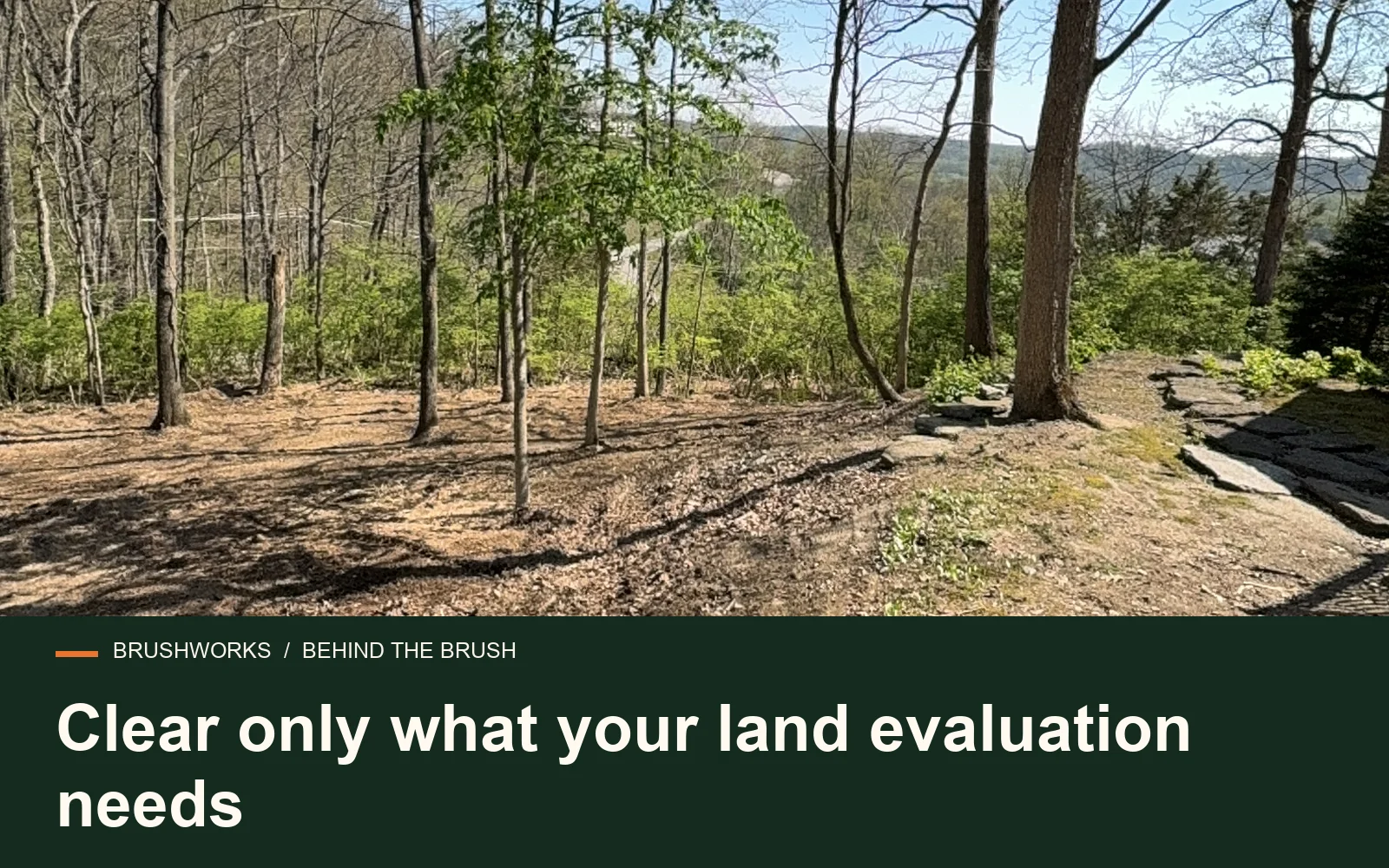
For investors, the first clearing pass should answer practical questions. Can a pickup get in without scraping both sides? Can a buyer, appraiser, contractor, or surveyor walk the land without fighting vines? Is there an old lane worth reclaiming? Are there field openings that can be brought back? Are there wet areas that should be avoided? Is the property better suited for recreation, resale, a home site, storage, pasture, or a slower hold?
That kind of clearing is selective. It opens the parts of the property that help you make decisions. It leaves areas alone when clearing them would add cost without adding useful information. On a rural investment parcel, knowing what not to clear can matter as much as knowing what to clear.
Start with access from the road
If the entrance is bad, everything else gets harder. Rural properties often have old farm drives, field entrances, shared lanes, narrow gates, hidden culverts, or steep approaches that have not been maintained. Brush grows into the sight line. Saplings close the shoulders. Vines pull down limbs. A driveway that was once usable becomes a tight slot that only works in dry weather.
Opening the entrance does several things at once. It lets vehicles reach the land. It gives contractors a place to meet and stage. It makes the property easier to show. It also reveals whether the driveway problem is mostly brush or whether the roadbed needs gravel, grading, drainage work, or culvert repair.
Do not assume the visible opening is the only option. Some parcels have an old access point buried in honeysuckle. Some have a legal access route that does not match the easiest path through the brush. If there is a recorded easement, shared drive agreement, or township requirement, sort that out before widening or changing the entrance.
Reopen lanes and trails before clearing acreage
In Ohio, many rural tracts already have old routes hiding under brush. You may find a farm lane along a field edge, a path to a barn foundation, a logging trail, a fence row access strip, or a route to a creek crossing. Reclaiming those routes is usually cheaper and cleaner than forcing a new path through the thickest part of the woods.
Good trail clearing follows the ground. It avoids wet pockets where possible, uses natural high spots, keeps turns wide enough for the intended vehicle, and leaves enough overhead clearance for equipment that may need to pass later. A lane for walking and ATV access can be narrow. A lane for a skid steer, tractor, utility truck, or gravel delivery needs more room.
Use clearing to improve due diligence
Before a rural property changes hands, gets financed, or moves into a bigger improvement plan, people need to inspect it. Surveyors need corners and lines. Soil evaluators may need access for septic planning. Builders need to see slope, access, and staging room. Fence contractors need the boundary opened. Appraisers and buyers need to understand what is usable and what is not.
Selective clearing can make that due diligence easier. It can open property corners, expose old pins if they are already known and marked, clear a path along a proposed driveway, or make room to inspect a barn, pond, creek, field edge, or old home site. It can also uncover problems early, which is better than finding them after a purchase or listing.
There is a line here. Clearing is not surveying, engineering, title work, soil testing, or environmental review. If the property has wetland concerns, stream buffers, steep erosion areas, disputed boundaries, or uncertain access rights, get the right professional involved. Brush clearing helps people reach and see the land. It does not replace the checks that protect the investment.
Fence rows and boundaries matter
Fence rows tell a lot about rural land. They show old use patterns, access points, neighbor conditions, animal pressure, tree lines, and maintenance needs. They also collect brush faster than almost anywhere else. Multiflora rose, honeysuckle, grapevine, locust sprouts, cedar, and volunteer trees can swallow old wire and make a boundary impossible to walk.
For an investment property, opening fence rows can help with surveying, resale, livestock planning, hunting access, and general maintenance. Buyers like to understand the edges. Owners like to know where gates, corners, and old wire sit before they plan new fence or pasture work.
Fence row clearing needs care. Old woven wire and barbed wire can be buried under leaves. Metal posts can sit inside shrubs. Trees may have grown through the fence. A mulcher should not be fed hidden metal. Walk what you can, mark known hazards, and be honest about areas that may need hand work before equipment can move through safely.
Drainage can decide the next use
Ohio rural land often changes character after a rain. Clay soil, old farm ditches, shallow swales, blocked culverts, pond overflow, spring seepage, and creek bottoms can make a parcel less usable than it looked during a dry showing. Brush makes drainage harder to read because it hides flow paths and low spots.
Clearing can open the view. A first pass around swales, ditch edges, culverts, pond banks, and old crossings can show where water is moving and where it is getting stuck. That helps you decide where to avoid building, where a road may need stone, where a contractor needs to look next, and which areas should stay in cover.
Be careful with drainage clearing. Do not push mulch into ditches or culvert mouths. Do not disturb creek banks just because brush is in the way. If a drainage feature is tied to a regulated stormwater system, wetland, stream, or public right of way, the owner may need guidance before changing it. Access clearing and drainage construction are different jobs.
What forestry mulching does well on investment land
Forestry mulching is a good fit for many first phase rural clearing jobs. It can grind brush, invasive shrubs, small trees, saplings, vines, and field edge growth into mulch where it stands. That means fewer brush piles, less hauling, and a cleaner route for walking or driving.
For investment properties, mulching is useful because it is flexible. A crew can open an entrance, cut a trail loop, reclaim a fence line, clean around an old barn, expose a field edge, or make a future build area easier to inspect. The mulch layer helps define the cleared route and can reduce bare soil exposure compared with scraping everything clean.
Avoid clearing that removes the reason people want the land
Some rural investors over-clear because they want the property to look improved fast. That can backfire. Wooded privacy, wildlife cover, mature trees, trail character, creek buffers, and screening from neighbors can be part of the value. A property that feels private and usable may sell or lease better than one that has been stripped into an exposed field.
The right clearing plan depends on the buyer or end use. A cabin buyer may want a tucked away site with a clean drive and a few trails. A small farm buyer may want field edges opened and fence lines exposed. A recreational buyer may care more about access, stand locations, and trail routes than wide open ground. A builder may need a driveway route, staging room, utility access, and a future septic area protected from damage.
When the final use is uncertain, clear in a way that keeps options open. Open the access. Reveal the useful ground. Remove the worst invasive brush. Keep good trees, buffers, and privacy where they help the property.
How clearing can help resale without promising a number
Land clearing can improve marketability when it fixes a real barrier. A buyer can walk the land. The photos show usable areas instead of a roadside thicket. The old lane is open. The property corners can be reached. A future building site can be seen. A fence contractor can quote the boundary. Those improvements can make a property easier to understand and easier to act on.
That does not mean every dollar spent on clearing comes back as a higher sale price. Rural land value depends on location, access rights, road frontage, utilities, soil, zoning, timber, terrain, water, demand, and the buyer's plans. Clearing helps most when it removes uncertainty or makes the next use more believable.
Agree on the handoff
Before work begins, define what the next person needs to find on site. A rough mulched opening may still contain roots, stump remnants, and uneven ground. Grading, structural preparation, planting, surfacing, and specialist tree work are separate unless explicitly included.
Keep the marked work map with the quote. At completion, compare the limits and finish, document any follow-up, and decide who will maintain the area. Photos help record the result, but they do not replace checking the ground and access.
Plan the work for your property
Send the site address, recent photos, a marked clearing area, and the finish you want. We can discuss where clearing fits and what needs a different trade.
Discuss your project → Explore pricing