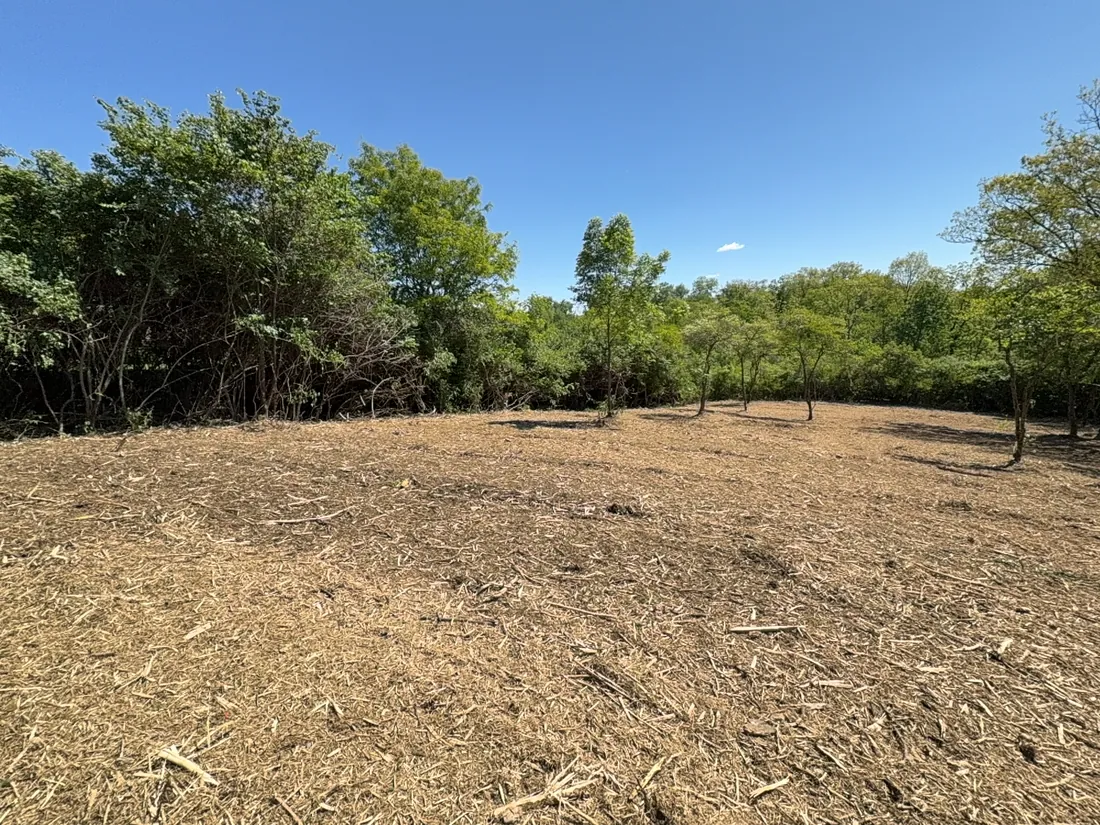
Open ground right after Brushworks mulched the brush, covered in a layer of fresh mulch

Aftercare · After the clearing

Aftercare: How to Keep Your Land Cleared

We cleared it. Here is how to keep it that way. Forestry mulching is the first step in taking back an overgrown area, not the only step. What you do over the next growing season decides whether it stays open.

Walk it firstCheck for stubs, rocks and old wire.
Wait to mowLet regrowth hit 5 to 6 inches, then mow high.
Spray on leavesWait for green growth before you spray.

Right after the job

What you are looking at.

A freshly mulched property looks rough for a few weeks. That is normal. Here is what each part of it is.

  1. 01

    The mulch layer

    Everything we cut was ground up and left in place. That layer covers the soil, holds moisture and slows regrowth while it breaks down. It is thicker where the brush was thickest.

  2. 02

    Stubs and roots

    Brush and small trees are ground down at or near the surface, not dug out, so you may see short stubs and roots for a while. Once those plants die off, they shrink down into the soil and break down like everything else. Over time you stop seeing them stick out. Stump grinding and root removal are separate work outside what we do.

  3. 03

    Track marks

    Our machines run on tracks. Where they turned or crossed soft ground you may see marks. Light marks usually settle with rain and time. If one bothers you, text us a photo.

  4. 04

    Things the brush was hiding

    Clearing opens up what was buried: old fence wire, trash, rocks, holes and ditches. Walk it before you put a mower or a kid on it.

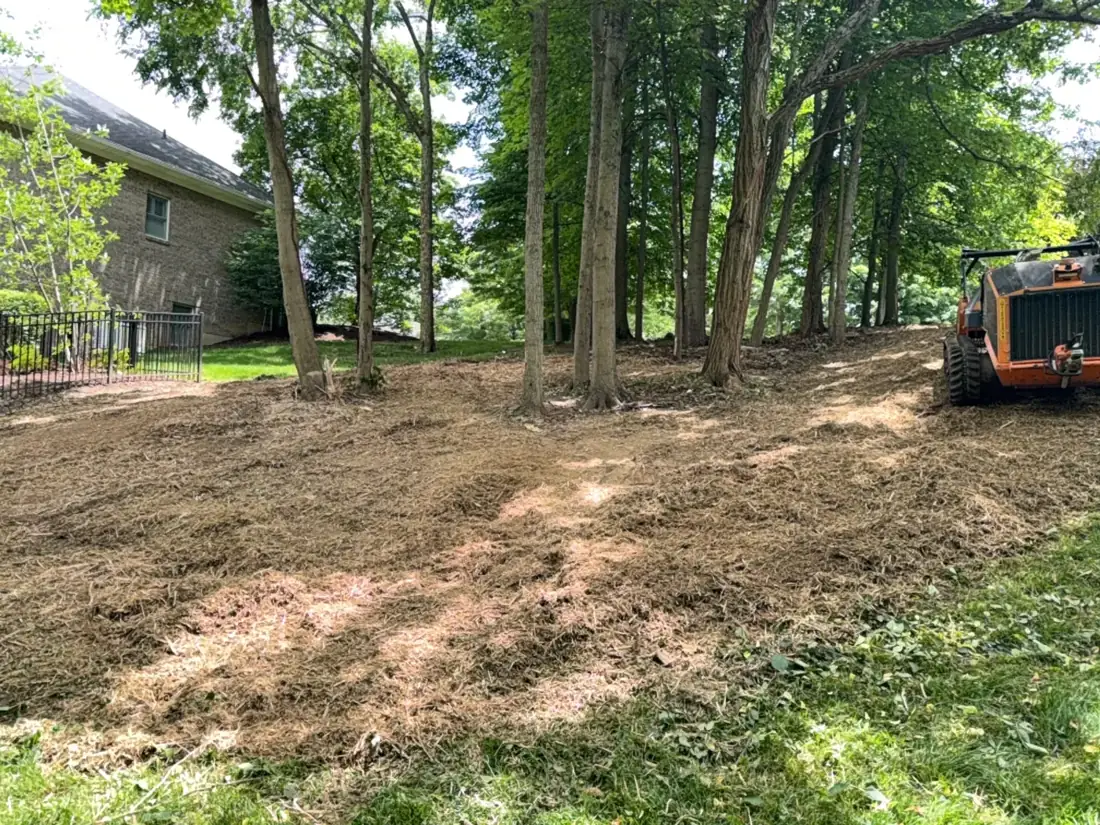
Freshly mulched slope beside a house right after Brushworks cleared the brush, mulcher still on site
Right afterRough, brown and covered in mulch.
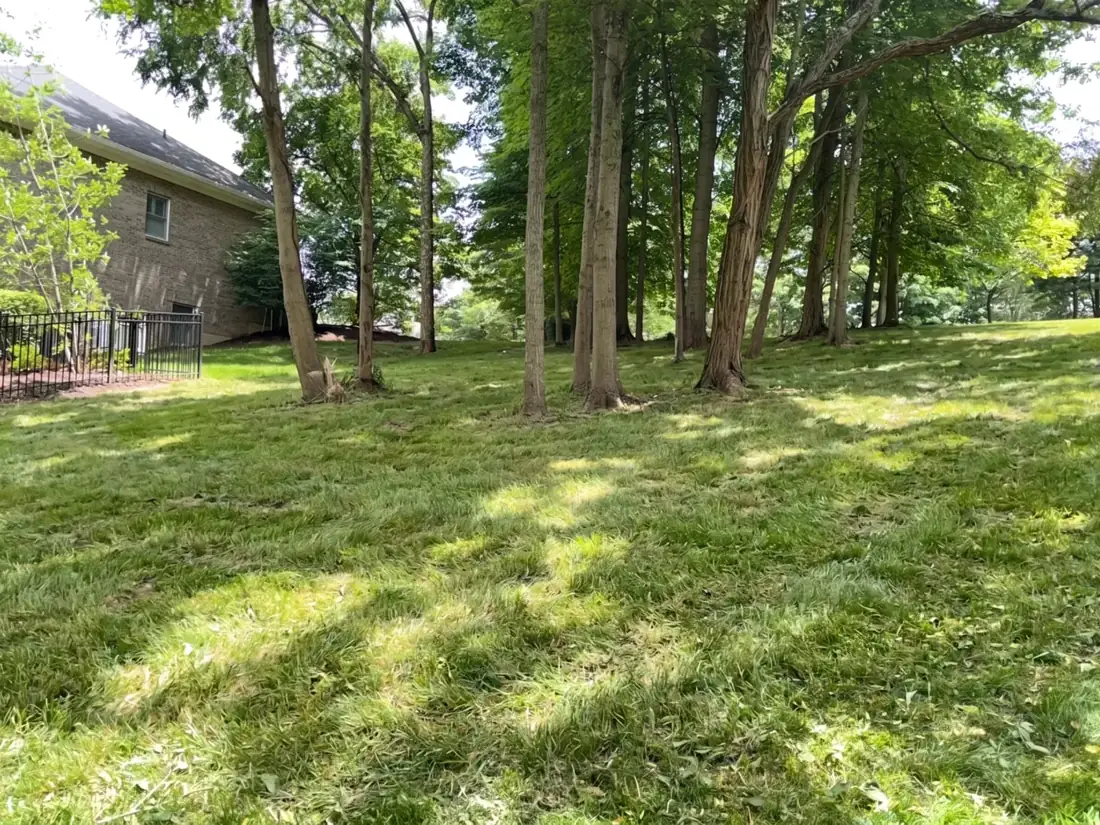
Illustration, AI-edited from the photo of the freshly mulched slope: the same slope grown in with grass and mowed
IllustrationWhat this slope can look like once grass fills in. AI-edited from the photo at left, not a later photo.

Your first week

Do these before anything else.

Ten minutes on foot before the first mow can save a mower deck. Treat the cleared area like a job site until you know it.

  1. 01

    Walk it first

    Look for stubs, rocks, wire and holes. Flag anything a mower blade would find the hard way later.

  2. 02

    Boots and long pants

    Freshly cut stubs can be sharp. Treat the area like a job site for the first few weeks.

  3. 03

    Watch for poison ivy

    If poison ivy was in the brush, its oil stays on the chips and stems. Wear gloves and long sleeves when you handle the mulch, and never burn it.

  4. 04

    Hold off on mowing and spraying

    Fresh mulch is fluffy and gets caught up in mower blades, and spray needs leaves to land on. Give the regrowth a few weeks first. See the regrowth section.

  5. 05

    Seed now if you want grass

    Right after clearing is the window. See the grass plan below.

  6. 06

    Check it against the plan

    Trees and areas we agreed to keep should still be there. If something does not match what we agreed on, text us a photo.

Pick your finish

Decide what this ground becomes.

The plan for the next season depends on what you want the area to be. Most properties land in one of these three.

Our standard recommendation

Grass you can mow

Spread grass seed right after clearing and water it in. Keep it watered for the first 2 to 4 weeks so the grass gets rooted before the regrowth does. Grass roots grow down through the mulch, help break it down and crowd out new seedlings. Make the first mow once it is 5 to 6 inches tall, with the deck on its highest setting.

  • Thick piles of chips are not a seedbed. Rake them thin, seed where soil shows through, or have us power rake it.
  • Around Cincinnati, late summer into early fall is the best time to seed. Spring works but is harder because spring weeds compete with new grass.
  • Seeded grass? Use a weed killer, not a weed and grass killer, so you do not kill the new grass.
  • Want a finished lawn? Plan on grading, topsoil or straw from a landscaper.

Lowest effort

Natural woods or open ground

Leave the mulch to break down on its own. Walk the area a few times each growing season and cut, pull or treat sprouts before they get woody.

  • Mark the trees and plants you want to keep so they do not get cut by mistake.
  • Spring and fall are the easiest times to spot honeysuckle coming back.

TruGreenCoordinated by Brushworks, applied by TruGreen

Hand it off: post-clearing treatment

A 3-treatment program aimed at honeysuckle, invasive brush and woody regrowth on the ground we cleared. We confirm the area and access, then TruGreen applies the treatments on a schedule.

  • Built to reduce regrowth pressure. It does not promise permanent eradication.
  • Best on areas that spray equipment can reach.

Want it done for you?

We can get the grass started.

If you would rather not seed it yourself, there are two ways we can help.

Brushworks service

Power raking

We power rake the mulch into the soil. That helps the mulch break down faster and leaves a soft seedbed for grass seed.

It needs a healthy amount of topsoil to work, so ask us whether your ground is a fit.

Ask about power raking

TruGreenThrough TruGreen, set up by Brushworks

Seed and fertilize

Want grass going right away? TruGreen offers a seed and fertilize service, and we can help organize it with them.

Text us to set it up
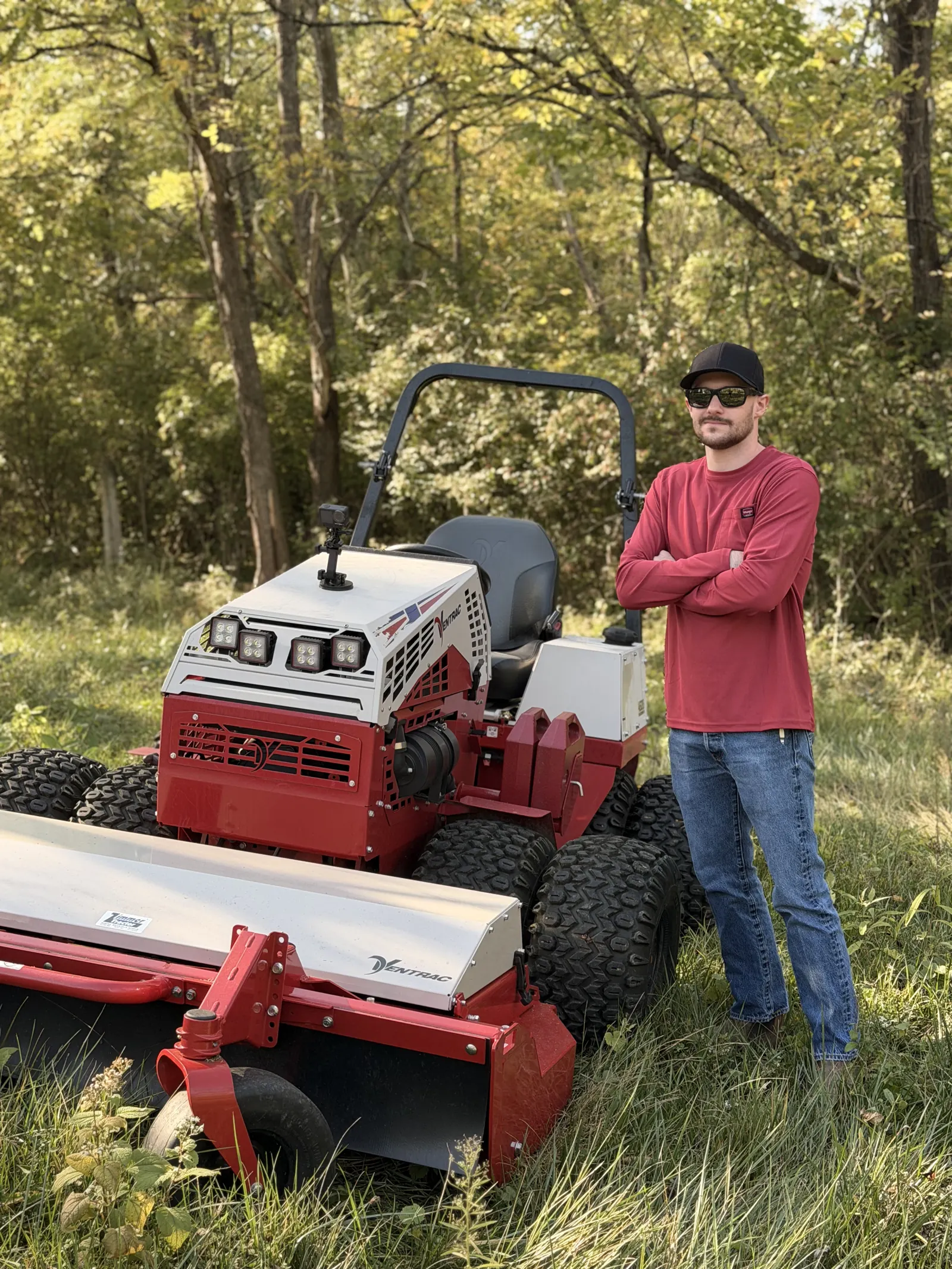
Brushworks operator standing beside a brush mower in an open field
First mow: wait for 5 to 6 inches of regrowth, then run the deck up high.

Regrowth

Let it come back a little. Then knock it down.

Honeysuckle and other woody brush resprout from roots left in the ground, and seeds that sat in the shade for years now get sunlight. The first growing season after clearing is when you will see it. Green sprouts do not mean the job failed. It means the roots are still alive.

That first regrowth actually helps you. As it comes back it wraps around the mulch and pulls it down to the surface, so the ground is not as fluffy and the chips stop getting caught up in mower blades. It also gives spray something to latch onto.

Wait for 5 to 6 inches

Let regrowth come back at least 5 to 6 inches before the first mow. Then run the mower deck at its highest setting.

Then mow regularly

After that first pass, keep mowing through the growing season. Every cut takes energy out of the roots.

Walk it before the first mow

Flag stubs, rocks and hidden wire before you put a deck over it. Rough ground eats blades.

Spot it in spring and fall

Bush honeysuckle leafs out before most native plants in spring and holds its leaves late into fall. Those are the easiest times to find it.

Rather have us handle it? See brush hogging or the post-clearing treatment program. Not sure what is coming back? Check our bush honeysuckle guide.

Treating it yourself

Spray when the leaves come back.

Spraying bare mulch does not do much. Wait until you see leaves coming back and sprouts coming up. Then the spray has something to latch onto and can kill the plant.

01

Wait for green

Once the regrowth is leafing out and sprouting, spray it. Too early and there is nothing for the spray to land on.

02

Only for the bad spots

Bad honeysuckle: paint on Tordon

Where honeysuckle keeps coming back hard, we recommend Tordon RTU. Do not spray it. Cut the honeysuckle and paint Tordon onto the fresh cut stump. It soaks down into the plant and kills it at the root.

Careful: Keep it away from trees and shrubs you want to keep. It can move through the soil and roots, and the label limits where you can use it and what you can plant after. Read the whole label first.

03

Weed killer or weed and grass killer

Pick by area. Where you want grass, use a weed killer that leaves grass alone. Where you want everything gone, use a weed and grass killer, like a 3-month or 6-month product. It kills everything it touches, and once it wears off you can seed grass there.

Always read and follow the product label, and keep spray off trees and plants you want to keep. Rather not handle chemicals? Our TruGreen program does it for you.

The mulch

How long does the mulch last?

It breaks down over years, not weeks. Thin layers go faster than thick piles, and moisture and grass growing through it both speed it up. You do not need to rake it up or haul it off. It is protecting the soil while it breaks down.

See it on real ground

Slopes and water

Check slopes after the first hard rains.

Walk slopes, banks and low spots after the first few big storms. Mulch helps cover the soil, but it is not an erosion-control system. Seed or straw bare spots. If you see water cutting channels, call us or a landscaper before it gets worse.

What not to do.

  • Don’t burn it

    There is no need, and burning anything with poison ivy in it is dangerous.

  • Don’t haul the mulch off

    It is covering the soil and slowing regrowth while it breaks down.

  • Don’t mow too soon

    Fresh mulch is fluffy and catches in blades. Wait for 5 to 6 inches of regrowth.

  • Don’t wait a full season

    Regrowth is easy to knock down early and hard to fix late.

Season by season

Your first year after clearing.

Keep this list handy for the first year. It is also in the printable PDF guide.

  1. First week

    • Walk the area and flag stubs, rocks and wire
    • Seed and water, or have us set up power raking or seeding
    • Hold off on mowing and spraying
  2. Weeks 2 to 4

    • Keep new seed watered
    • Stay off soft ground after rain
    • Watch for the first sprouts
  3. First growing season

    • First mow at 5 to 6 inches, deck on its highest setting
    • Spray once the regrowth leafs out
    • Mow regularly and check slopes after hard rains
  4. Fall

    • Walk it while honeysuckle still has leaves
    • Note where regrowth is coming back
    • Decide on treatment or a maintenance pass
  5. Next spring

    • Honeysuckle leafs out first: spray or paint it then
    • Reseed thin spots
    • Keep mowing

FAQ

Aftercare questions.

Have a question that isn't here? Call 513-790-4150.

Will the brush grow back?

Some of it will try. Roots left in the ground resprout and buried seeds get sunlight. Mowing, seeding grass or the treatment program keeps it from taking over again.

When can I mow over the mulch?

Not right away. Let regrowth come back at least 5 to 6 inches first. It wraps around the mulch and pulls it down so it is not fluffy and getting caught in the blades. Then mow with the deck at its highest setting.

When should I spray?

Once you see leaves coming back and sprouts coming up. The spray needs leaves to latch onto. For bad honeysuckle, cut it and paint Tordon RTU onto the fresh stump instead of spraying.

When should I seed?

Right after clearing if the timing works. Around Cincinnati, late summer into early fall is the best window for grass seed. Spring works but is harder because spring weeds compete with new grass. Keep it watered for the first 2 to 4 weeks. If you used a weed and grass killer, wait until it wears off.

Can you seed it for me?

Yes. We can power rake the mulch into the soil, which speeds up breakdown and leaves a soft seedbed. It needs a healthy amount of topsoil to work. TruGreen also offers seed and fertilize, and we can help set that up.

Do I need to remove the mulch?

No. Leave it. It covers the soil and slows regrowth while it breaks down. Rake out thick piles only where you want to seed.

What about the stumps?

We grind brush and small trees down at or near the surface, not below ground. Stubs and roots that stick up for a while shrink down into the soil once the plants die off, then break down like the mulch. Digging out roots or grinding stumps below ground is separate work.

Do I have to sign up for the treatment program?

No. It is optional. It is there if you want help keeping regrowth down without doing it yourself.

Keep the ground you paid to clear.

Save the guide, walk the property this week, and text us a photo if anything looks off.

Download the guide (PDF) Sign up for treatment Call (513) 790-4150