
Before you start
- Inspect drainage before setting a start date.
- Avoid assuming frozen-looking ground will support equipment.
- Plan how exposed ground will be stabilized afterward.
Spring: check the route after rain
Spring planning should account for soft approaches and changing drainage. Walk the accessible edges after rain and photograph standing water, culvert outlets, and low crossings. Ask the operator to assess whether the full route can support the proposed work.
An early opening can leave time for later planting or construction, but the date alone does not make a seedbed or building site ready. Keep the follow-on finish and weather allowance in the plan.
Summer: visibility and active use matter
Dense foliage can hide wire, holes, and retained plants. Mark known hazards and explain any areas that could not be inspected. Household, livestock, and public access may need temporary separation from the work.
Keep a record of returning vegetation while it can be identified. Do not select a treatment solely from a rough clearing date or assume that repeatedly cutting every plant is the appropriate follow-up.
Fall: use visibility without assuming dry soil
Thinning leaves can help with marking trees and defining edges. They do not prove that shaded slopes, springs, or trailer parking are firm. Inspect those areas separately and retain flexibility to postpone.
If work will stop for the season, agree on drainage inspections and any stabilization needed before leaving the site. A mulch layer is not a substitute for a site-specific erosion plan.
Winter: frozen-looking is not necessarily load-bearing
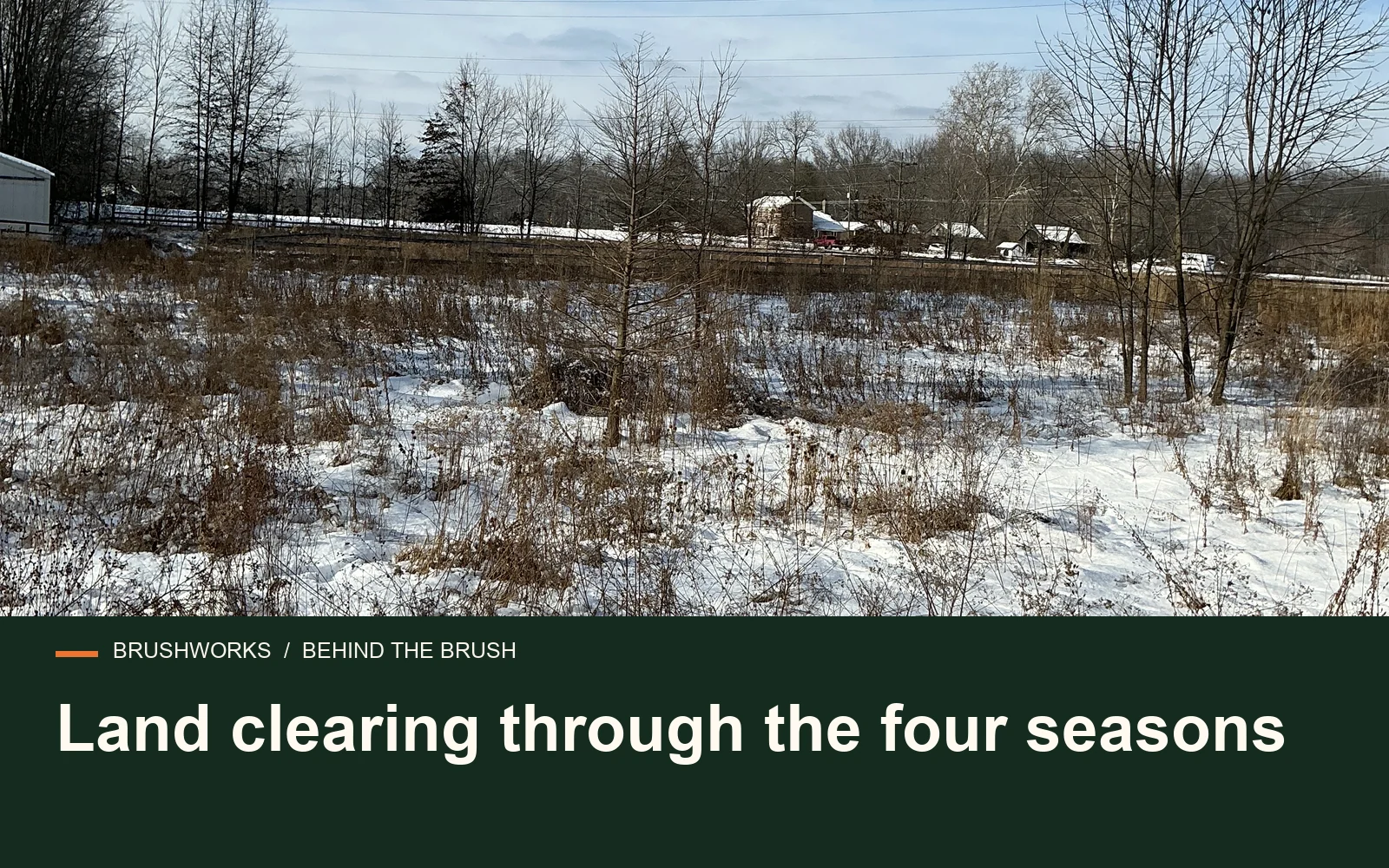
Snow and a frozen surface can conceal soft ground, debris, and edges. Ask how the operator will evaluate access and hidden obstacles. A thaw can change the plan during the job.
Where a winter opening is useful, record the limits and arrange a later inspection when the ground and returning vegetation are visible. The useful question is which window fits this site and its next operation—not which season wins in general.
Plan the work for your property
Send the site address, recent photos, a marked clearing area, and the finish you want. We can discuss where clearing fits and what needs a different trade.
Discuss your project → Explore pricing