
Before you start
- Write the intended use for each clearing area.
- Mark boundaries and trees to keep.
- Choose one useful first phase if the final layout is uncertain.
What Does "Clearing Land" Actually Mean?
When someone says they need to "clear my land," they could mean several different things. Understanding what level of clearing you actually need is the first step toward choosing the right method and getting an accurate cost estimate.
For most Ohio property owners, "clearing land" typically means:
Removing heavy brush —honeysuckle walls, briar patches, and dense undergrowth
Opening up wooded edges —reclaiming property boundaries that have been swallowed by forest
Method #2 – Brush Hogging (When It Works & When It Fails)
Brush hogging uses a tractor-mounted rotary mower to cut down tall grass and light brush. It's a common method, but it has significant limitations that make it unsuitable for most land-clearing projects.
Cannot operate safely on steep hills common in Cincinnati suburbs
Brush hogging is essentially "mowing on steroids"—it cuts vegetation down but doesn't remove it. For properties with dense honeysuckle, saplings, or woody growth, brush hogging will leave you with a field of stubble that regrows quickly. It's also dangerous on hillsides, where tractors can tip or lose traction.
Method #3 – Bulldozing & Excavation (Right Tool for Big Prep Jobs)
Bulldozers and excavators are powerful machines designed for heavy-duty land preparation. They're the right tool for certain jobs, but they're often overkill—and expensive—for typical homeowner clearing needs.
Construction prep —clearing pad sites, roadway cuts, and building foundations
Large-scale development —preparing multiple acres for commercial or residential development
Complete site transformation —when you need bare dirt ready for grading and construction
Method #4 – Tree Services (Not Designed for Acreage Clearing)
Tree services excel at removing individual large trees near structures, power lines, or in tight spaces. They're essential for specific situations, but they're not designed for clearing multiple acres of brush and undergrowth.
Removing individual large trees near structures or power lines
Precision tree removal in tight spaces where heavy equipment can't operate
Clearing multiple acres of brush and undergrowth—too slow and expensive
How Long Will It Take to Clear My Land?
Timeline depends on acreage, brush density, terrain, and equipment type. Here are realistic expectations for forestry mulching projects:
When DIY Fails
Many property owners attempt DIY land clearing to save money, but they often end up spending more time and money than hiring a professional—or worse, creating dangerous situations.
Getting a tractor stuck on wet or hilly ground—requiring expensive recovery services. Professional operators know how to assess terrain and choose the right equipment for the conditions.
Clearing land is simple with the right equipment—and nearly impossible without it.
Professional forestry mulching equipment is designed specifically for land clearing. It's more powerful, more efficient, and safer than rental equipment. For most property owners, hiring a professional is faster, safer, and more cost-effective than attempting DIY clearing.
Agree on the handoff
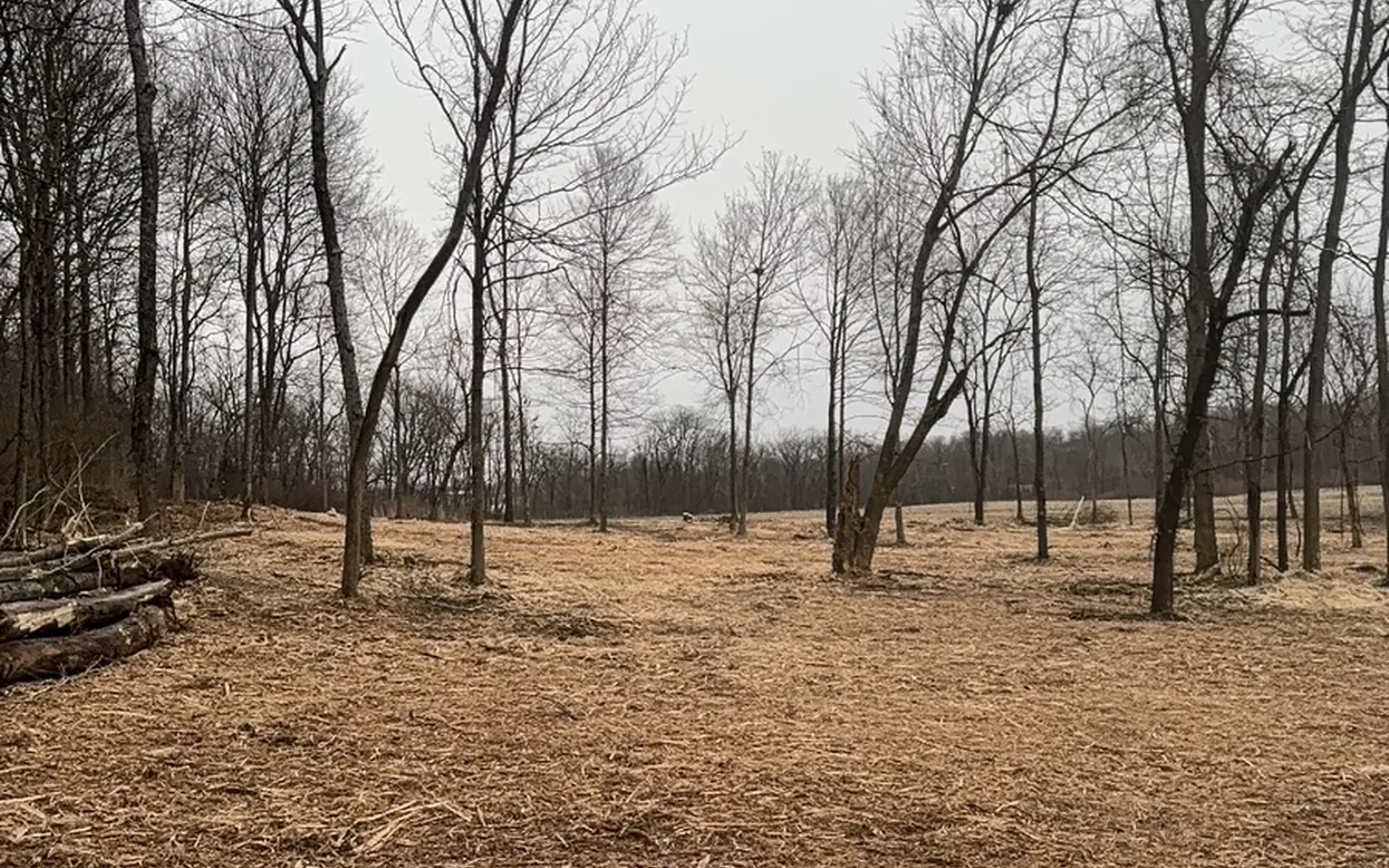
Before work begins, define what the next person needs to find on site. A rough mulched opening may still contain roots, stump remnants, and uneven ground. Grading, structural preparation, planting, surfacing, and specialist tree work are separate unless explicitly included.
Keep the marked work map with the quote. At completion, compare the limits and finish, document any follow-up, and decide who will maintain the area. Photos help record the result, but they do not replace checking the ground and access.
Plan the work for your property
Send the site address, recent photos, a marked clearing area, and the finish you want. We can discuss where clearing fits and what needs a different trade.
Discuss your project → Explore pricing