
Before you start
- Plan access for testing, seed, and amendments.
- Keep valuable cover near the opening.
- Decide how woody debris will be handled before planting.
Choose a usable opening
Consider sunlight, soil, drainage, nearby cover, and your ability to reach the plot with maintenance tools. Clearing a remote pocket is less useful if you cannot get seed or amendments to it.
Avoid removing valuable habitat simply to make the plot larger. Define the goal for the property and choose the smallest opening that serves it.
Inspect the surface before planting
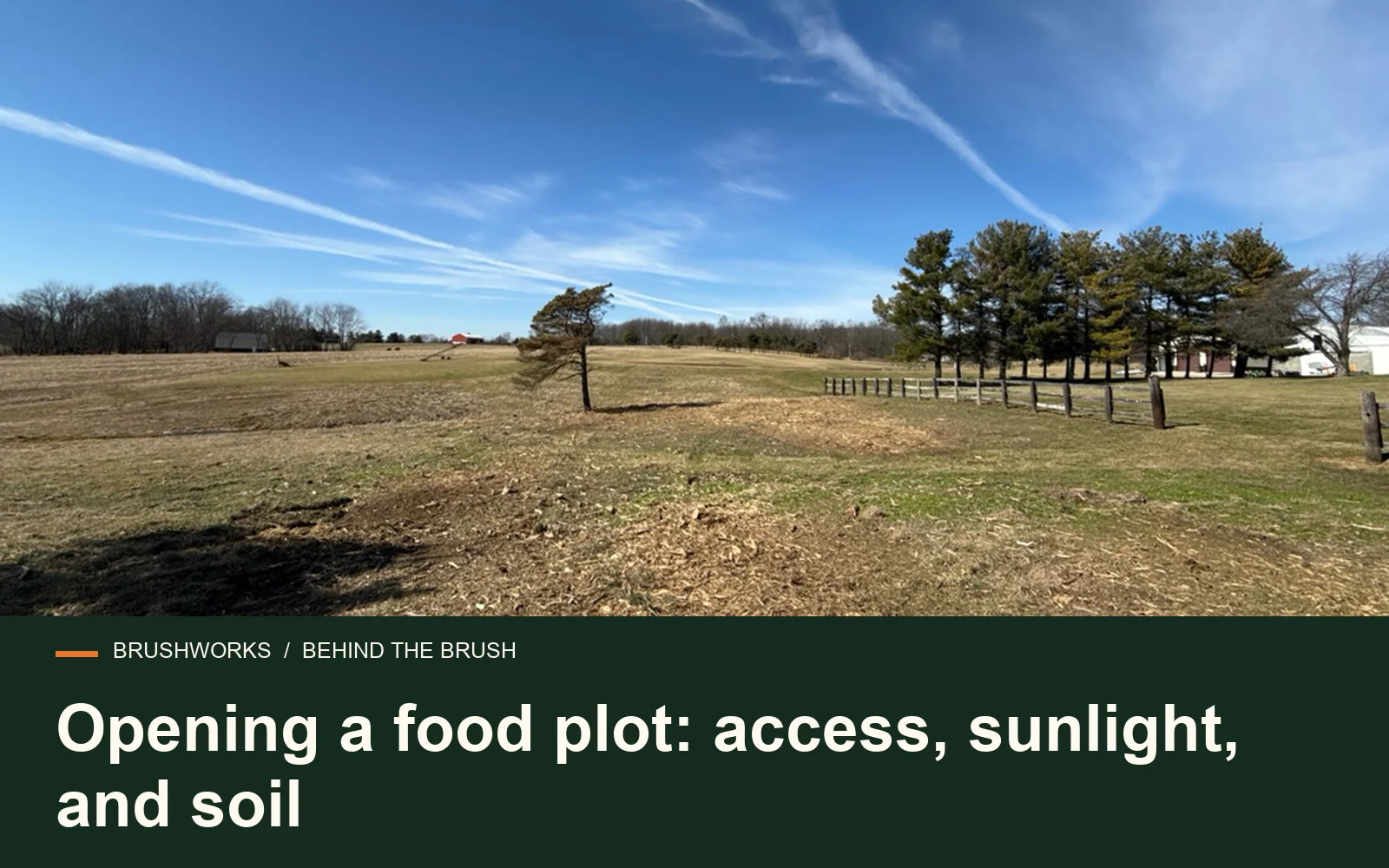
Mulching can expose a potential plot while leaving roots, stumps, and woody material. It does not automatically create ground ready for a disc, drill, or other implement.
Tell the contractor how you intend to plant so the required finish is clear. Ask about additional stump work, material handling, and soil preparation before pricing the clearing alone.
Use soil information to choose the next step
Obtain a soil test and use appropriate local advice for amendments and planting choices. The response depends on actual soil conditions rather than an assumption that every wooded opening needs the same treatment.
Think through how you will establish and maintain the plot with your available equipment. Buying a seed mixture before you have workable access or a planting surface can put the steps in the wrong order.
Keep maintenance realistic
Inspect for unwanted growth, drainage problems, and bare areas after establishment. Maintain access without unnecessarily disturbing surrounding cover.
Record what you planted and what you observe so the next season’s decisions are based on the site. A food plot is an ongoing management project, not a guaranteed hunting outcome from a single clearing visit.
Plan the work for your property
Send the site address, recent photos, a marked clearing area, and the finish you want. We can discuss where clearing fits and what needs a different trade.
Discuss your project → Explore pricing