
Before you start
- Report damaged power lines to the utility.
- Document damage from a safe location.
- Separate dangerous tree work from accessible debris processing.
Handle the immediate hazards first
Stay away from downed or damaged utility lines and contact the utility. A wire can remain dangerous even when it appears inactive. Keep people and animals out of the affected area.
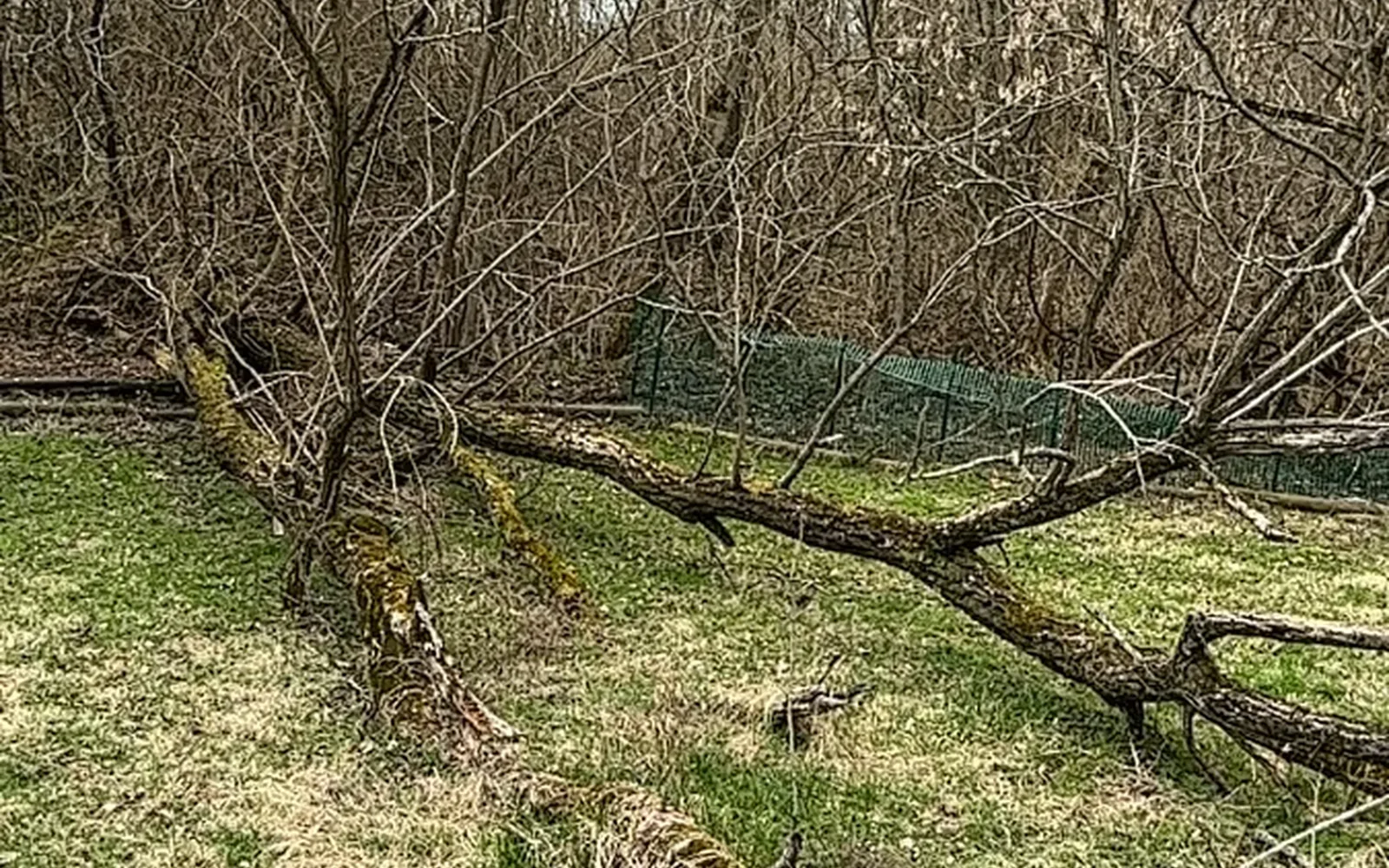
Leaning trees, split trunks, hanging limbs, and bent stems can release unexpectedly. A qualified tree professional should assess these before general cleanup. A brush-clearing machine is not a substitute for controlled hazardous-tree work.
Document from a safe location
Take wide photographs showing access, buildings, and damaged vegetation without entering the hazard area. Record what is blocking essential access and tell the contractor whether an insurer or utility is involved.
Do not move property or begin nonessential demolition merely to improve the appearance for a photograph. Keep emergency stabilization and routine debris cleanup distinct.
Define the cleanup after hazards are resolved
Ask what happens to logs, brush, chips, stumps, and material mixed with fencing or building debris. Confirm the area to be restored and what ground repair is separate.
A useful sequence is hazard resolution, essential access, debris handling, then inspection and restoration. Arrange the appropriate crew for each stage and do not reopen the area simply because the largest obstruction has been moved.
Make the handoff between crews explicit
Once the utility or tree professional has addressed the immediate hazards, ask what remains unsafe or incomplete. A line repair does not necessarily resolve every damaged tree, and removal of a tree does not automatically clear mixed building debris. Record the remaining restrictions before another crew starts.
For routine cleanup, agree where trucks and equipment can enter without damaging intact property. Identify material that must be preserved for an insurer's review and confirm who can authorize additional work. Finish with an inspection of access, debris, and ground damage. Keep the paperwork and photographs together so the emergency response and later restoration remain understandable.
Plan the work for your property
Send the site address, recent photos, a marked clearing area, and the finish you want. We can discuss where clearing fits and what needs a different trade.
Discuss your project → Explore pricing