
Before you start
- Ask for a site-specific operating assessment.
- Identify the safe operator position and work boundary.
- Keep bystanders outside the equipment's specified exclusion zone.
Why remote equipment may be useful
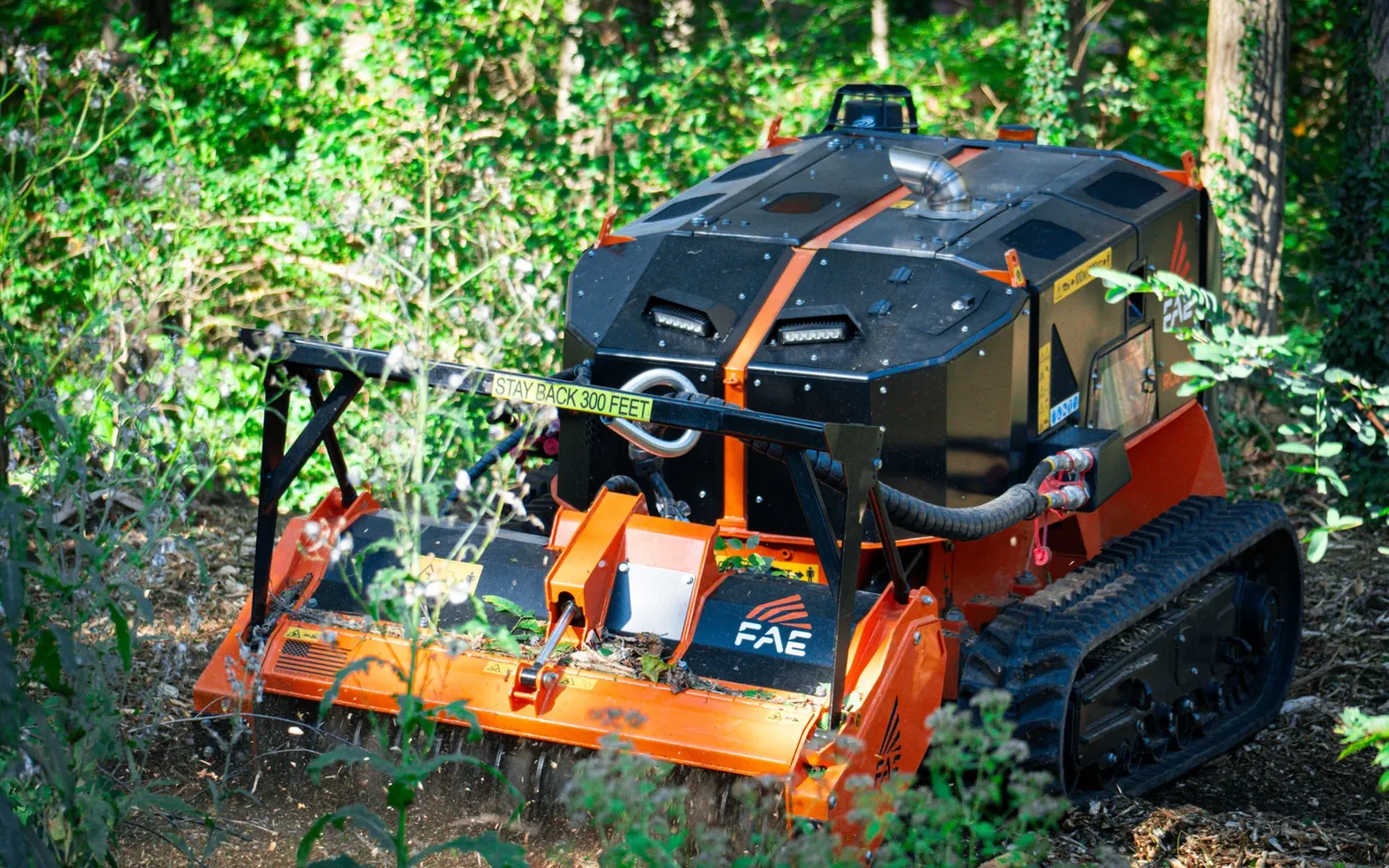
A remote mulcher can allow the operator to control suitable work without sitting on the machine. Its compact form may also fit certain access constraints. Those are capabilities to evaluate, not a promise that it can work on any slope.
Have the operator assess the terrain, surface, obstacles, and position needed to maintain control and visibility.
Use the actual operating limits
Manufacturer instructions, attachment setup, ground conditions, and the particular route govern operation. A published slope figure does not by itself authorize work across every surface or direction.
Keep people, pets, vehicles, and vulnerable property outside the specified work exclusion zone. Remote control does not eliminate thrown debris or the consequences of a machine losing traction.
Agree on the finish and inaccessible areas
A hillside may need a mix of methods or retained areas. Define where work stops, what vegetation remains for protection, and how drainage will be kept clear.
After operations, inspect from a safe position for remaining debris and developing runoff problems. If the intended use requires a path, lawn, or structural work, specify that follow-up separately from mulching.
Useful information for the site assessment
Provide wide photographs from safe viewpoints showing the hillside and the area below it. Include the entry route, tight gates, buildings, roads, drainage features, and places used by neighbors. Close-ups of dense brush alone do not show whether the operation can be set up appropriately.
Ask the operator to identify any areas that will be excluded and the alternative approach for those locations. Clarify how you will communicate during the job without entering the work zone. The quote should reflect these practical constraints, rather than relying on an equipment specification as a blanket assurance that the whole site can be cleared.
Watch the field video
Plan the work for your property
Send the site address, recent photos, a marked clearing area, and the finish you want. We can discuss where clearing fits and what needs a different trade.
Discuss your project → Explore pricing