
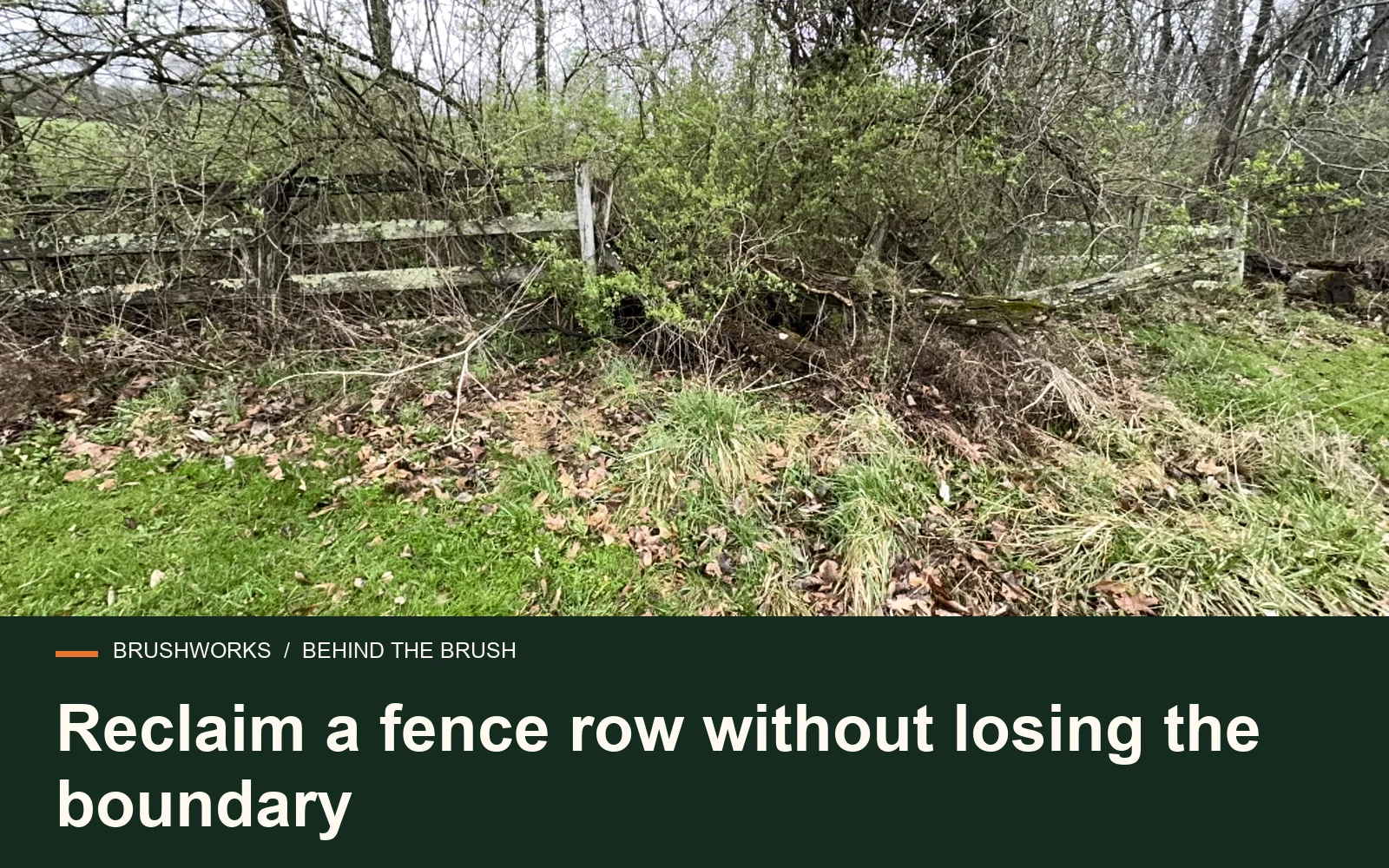
Before you start
- Confirm the property line.
- Mark fence and trees to retain.
- Agree on wire extraction and post-area finish.
Verify the line before following the brush
An old fence and the actual property boundary may not coincide. Have uncertain boundaries resolved before marking trees or vegetation for removal. Agree on any shared work with the appropriate parties.
Show which posts, wire, gates, and trees will remain. Use a marking system the clearing crew and fence contractor both understand.
Expose and remove old material deliberately
Fence rows can hide wire, staples, posts, dumped material, and utilities. Mark known obstructions and tell the crew where the growth prevented inspection.
Arrange a staged approach where necessary: open visibility, inspect the exposed material, handle it separately, then complete the required finish. Do not treat metal tangled in vegetation as ordinary mulch feedstock.
Provide room for installation and later repairs
Ask the fence contractor what space is needed for posts, braces, materials, and equipment. Include gate swings and approaches, not only the straight line between corners.
Decide where roots and stump remnants must be removed for post locations and traffic. A rough mulched lane may improve visibility without completing the installation surface.
Inspect the result as a working boundary
Check access to corners, drainage crossings, and repair points. Confirm that retained screening and shade match the plan, and record any excluded or postponed section.
Assign mowing, trimming, and regrowth inspection after the first clearing. A visible, reachable fence is easier to maintain than an edge opened once with no follow-up responsibility.
Plan the work for your property
Send the site address, recent photos, a marked clearing area, and the finish you want. We can discuss where clearing fits and what needs a different trade.
Discuss your project → Explore pricing