
The short version
- Seed soon after clearing and water it in. Timing matters; see the table.
- Keep the seed moist for the first 2 to 4 weeks.
- Rake thick chip piles thin, or seed where soil shows through.
- First mow at 5 to 6 inches, mower deck on its highest setting.
- Late summer to early fall is the best time to seed in Ohio. Spring is harder; see the table below.
Will grass grow through the mulch?
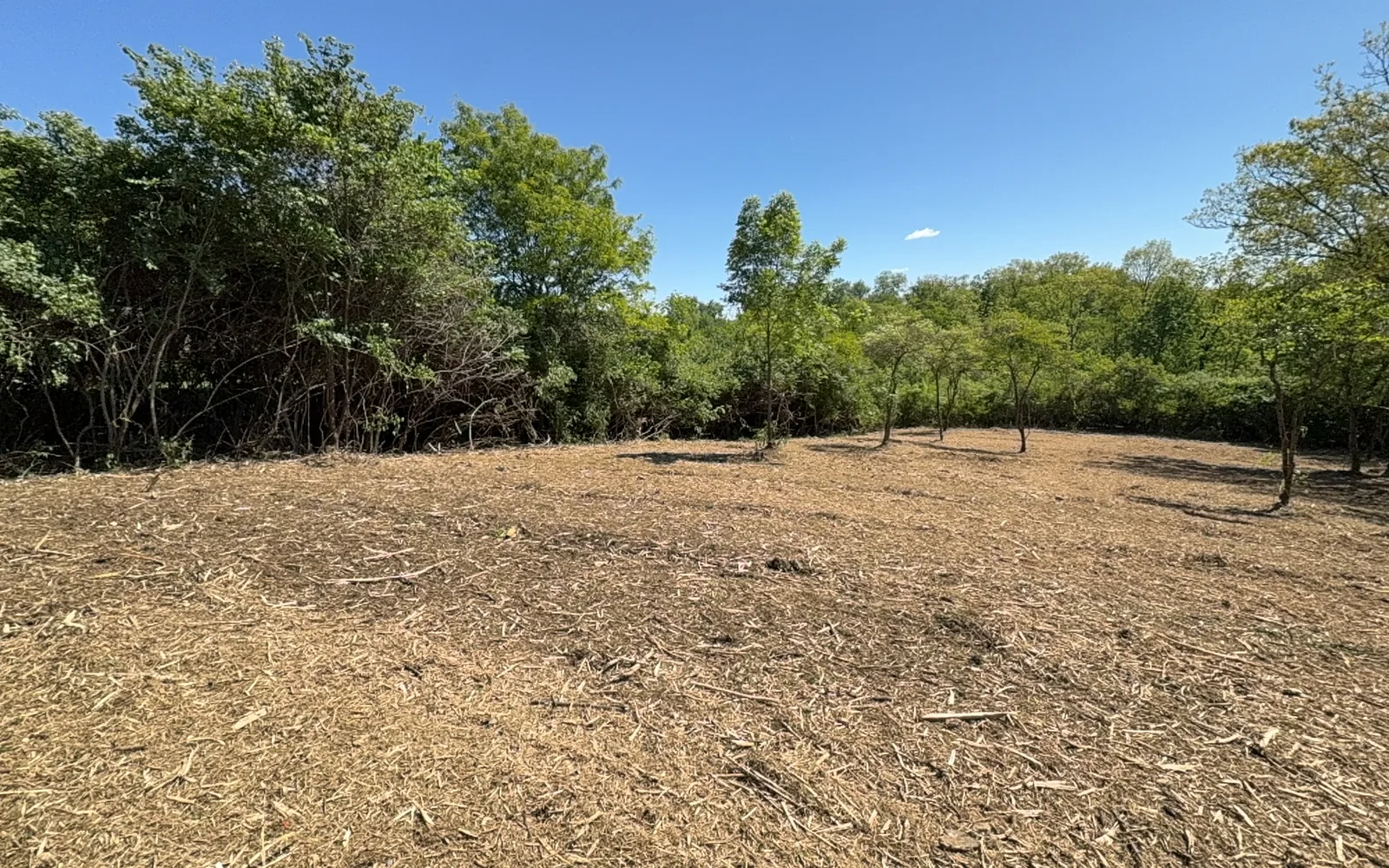
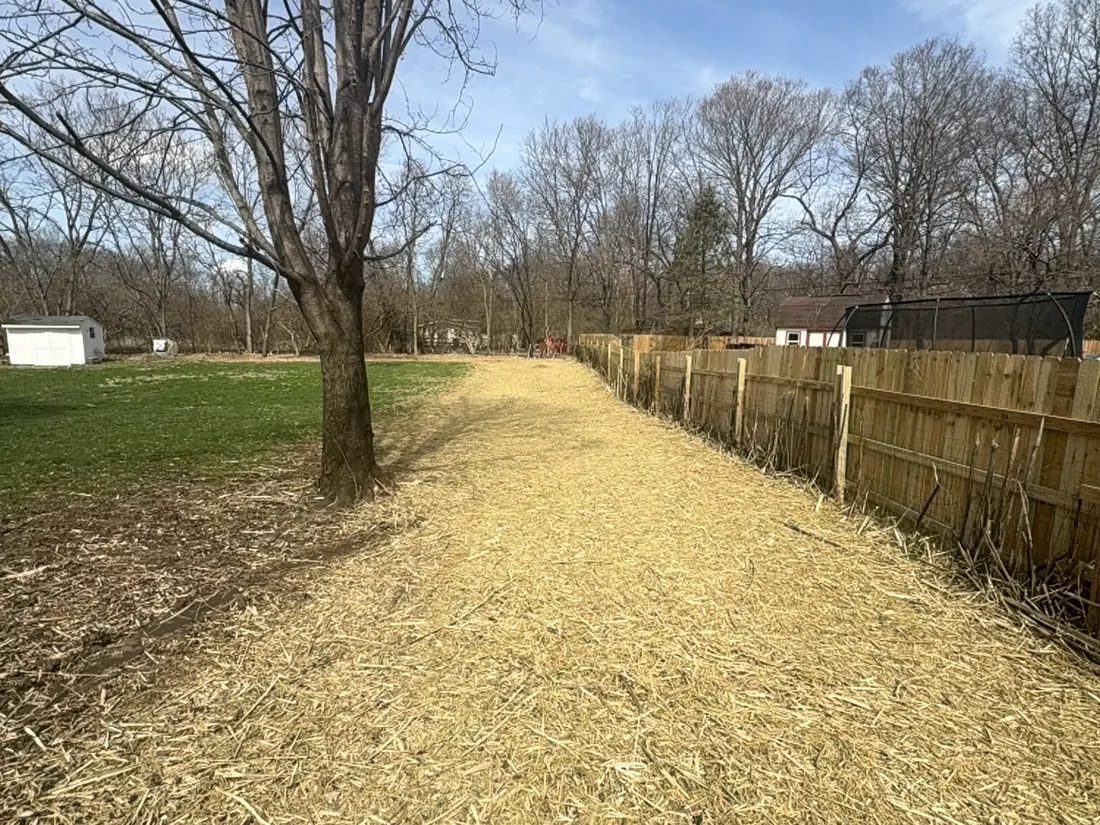
Yes, where the mulch is thin. Mulching opens the ground to sunlight, and grass seed has to reach soil to grow. WVU Extension puts it simply: seed needs good contact with the soil to establish.
Once it's up, grass works in your favor. The roots grow down through the mulch, help pull it down to the soil, and speed up how fast it breaks down. The new turf also crowds out brush seedlings trying to come back.
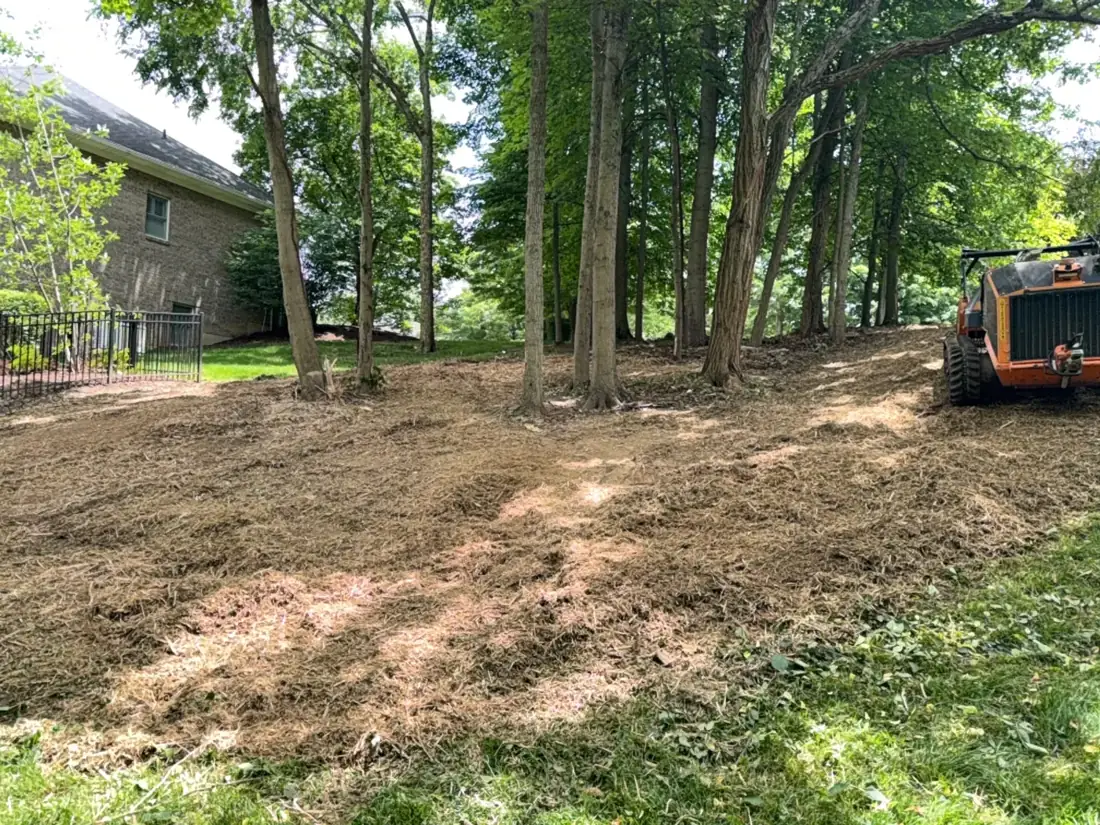
The trouble spots are where the brush was thickest. The mulch is deeper there, and seed sitting on a few inches of chips won't reach soil. Rake those spots thin before you seed.
When to seed
The best time to seed a lawn in our area is late summer into early fall. Purdue's turf specialists put the best window at August 15 to September 15, and Ohio State says late August to early September is a great time to plant. The soil is still warm, rain picks up and nights cool off.
Spring works, but it's harder. Purdue calls spring seeding "very difficult and often unsuccessful." Crabgrass and other spring weeds come up with the new grass and can choke it out. If you seed in spring, do it early and keep after the watering.
| When we clear | When to seed | Why |
|---|---|---|
| Mid-August to mid-September | Right away | You're in the best window. |
| Late September to November | Dormant seed later in the season, or seed early in spring | Purdue's best window ends September 15. Late September can still work around here, but it's a gamble. |
| Winter | Dormant seed, or seed early in spring | Purdue notes dormant seeding from about Thanksgiving to March in Indiana; the seed sits until the soil warms. |
| Spring | Right away, as early as you can | Get ahead of crabgrass and the brush regrowth. |
| Early summer | Seed right away and keep it watered, or wait for mid-August for the best odds | Purdue's best window opens August 15. |
How to seed a mulched area
- Walk it first. Flag stubs, rocks and old wire so nothing surprises you or a mower later.
- Thin the thick spots. Rake deep chip piles out thin, or seed where you can see soil.
- Spread the seed. Use a seed mix suited to your sun and shade.
- Press it in. A light raking or rolling gets the seed touching soil, which helps it sprout.
- Keep it moist. Water so the seedbed stays damp for the first 2 to 4 weeks, until the grass is rooted.
- Wait to mow. Let it reach 5 to 6 inches, then mow with the deck on its highest setting.
Why wait to mow
Fresh mulch is fluffy and catches in mower blades. As grass and regrowth come up, they wrap the chips and pull them down to the ground. Give it those 5 to 6 inches and the first mow goes much smoother.
Want a lawn faster?
Two ways to get there faster, both set up through us:
- Power raking. We power rake the mulch into the soil. It speeds up how fast the mulch breaks down and leaves a soft seedbed. It needs a healthy amount of topsoil to work, so ask whether your ground is a fit.
- Seed and fertilize through TruGreen. TruGreen offers seed and fertilize, and we can help set it up with them, ideally right after the clearing.
Mixing chips into soil? Plan on fertilizer.
Chips on top of the ground tie up less nitrogen than chips mixed into the soil. Oregon State Extension notes that chips mixed into soil have a greater tendency to tie up nitrogen. After power raking, a seed-and-fertilize plan helps the new grass.
Keep the brush from coming back through
Roots left in the ground will resprout, and seeds that sat in the shade for years now get sun. A good stand of grass plus regular mowing keeps most of it down. For the rest:
- Spray once the regrowth leafs out. Spray needs leaves to land on.
- On seeded ground, use a weed killer that leaves grass alone, not a weed-and-grass killer. On newly seeded ground, wait until the grass has been mowed about three times, and follow the label. Purdue gives the same advice for new seedlings.
- Bad honeysuckle can be cut and painted with a stump treatment. Our honeysuckle guide covers it.
- For areas you're not seeding, our post-clearing treatment program with TruGreen treats the regrowth. Seeding too? Ask us how to time the two.
Watch our grass seed experiment
We seeded mulched ground and tracked it for a year. The 3-month update shows the early stage.
Common questions
Can I spread grass seed right on top of the mulch?
Where the mulch is thin and you can see soil, yes. Where the chips are a few inches deep, rake them thin first. Seed has to touch soil to grow.
How long until I can mow?
Let the grass and regrowth reach 5 to 6 inches, then mow with the deck on its highest setting. Walk the area first and flag any stubs.
Do I need to bring in topsoil?
Usually not for a basic stand of grass. If you want a finished, smooth lawn, plan on grading, topsoil or straw from a landscaper. Power raking also needs a healthy amount of topsoil to work.
Should I remove the mulch first?
No. It protects the soil and slows the regrowth while it breaks down. Only rake out thick piles where you want to seed.
Can I seed in the winter?
You can dormant seed. Purdue notes it from about Thanksgiving to March in Indiana: the seed sits until the soil warms in spring. Otherwise, seed early in spring or wait for mid-August.
Sources
- Purdue University Turfgrass Science: Start seeding cool-season turf now (Aaron Patton)
- Purdue Extension AY-20: Seeding a turf area in the spring
- Ohio State University BYGL: My lawn looks terrible this summer! What can I do?
- West Virginia University Extension: Establishing a lawn
- Oregon State University Extension: Wood chips for mulch?
Want help getting the grass started?
Ask about power raking or setting up seed and fertilize when you get your clearing quote.
Get a free quote → Read the aftercare guide