01
Hollow, brown center
Snap or cut an older stem. Invasive bush honeysuckle is hollow with a brown center. Native honeysuckles have a solid stem. This is the most reliable test.
Illustration: Brushworks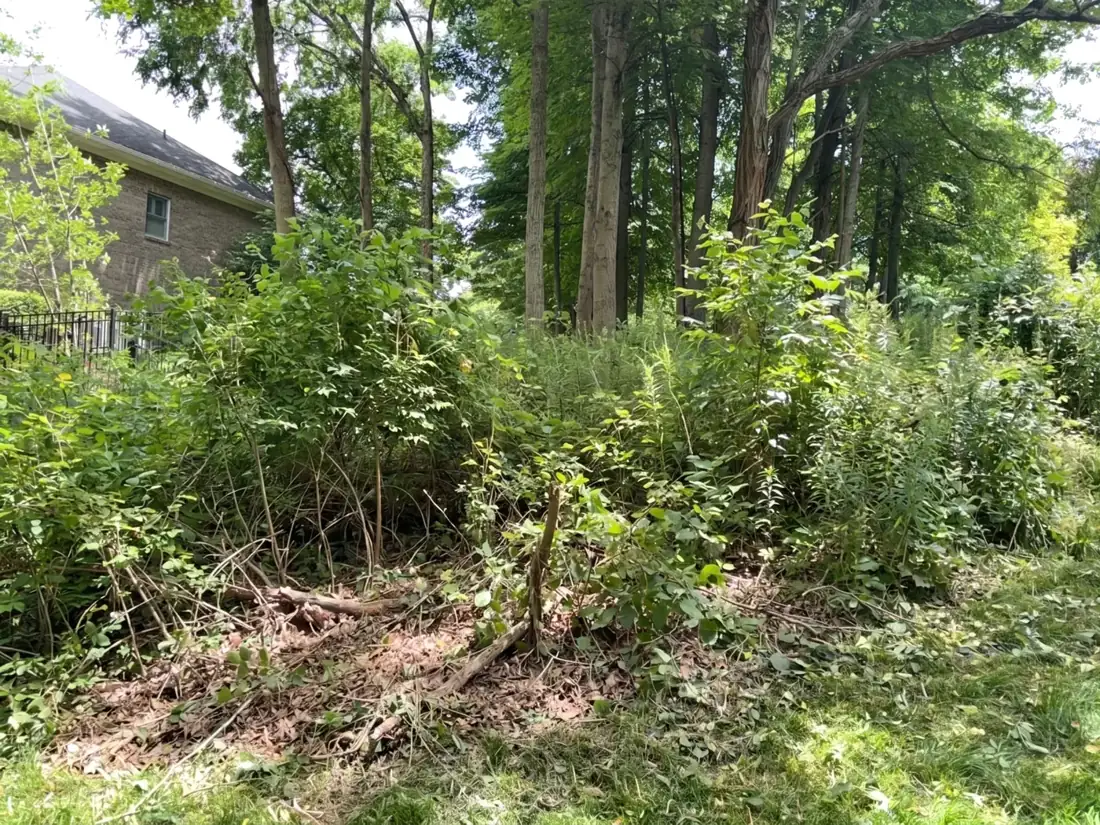
Field guide · Invasive plants
If the woods behind your house have turned into a green wall you cannot walk through, there is a good chance it is bush honeysuckle. Here is how to know for sure, and what actually works to get rid of it.
Why it matters
Bush honeysuckle is a group of invasive shrubs (Amur, Morrow’s, Tatarian and their hybrids) brought over as ornamentals. They grow 6 to 20 feet tall with long arching branches, and they handle sun or shade, so they fill woodland edges, fence rows, fields and the understory of open woods.
Left alone it forms thickets so dense nothing else grows underneath. It spreads two ways: birds eat the berries and drop seeds everywhere, and cut stems sprout right back from the roots.
How to identify it
Check two or three of these together. The hollow stem is the surest single test.
Snap or cut an older stem. Invasive bush honeysuckle is hollow with a brown center. Native honeysuckles have a solid stem. This is the most reliable test.
Illustration: Brushworks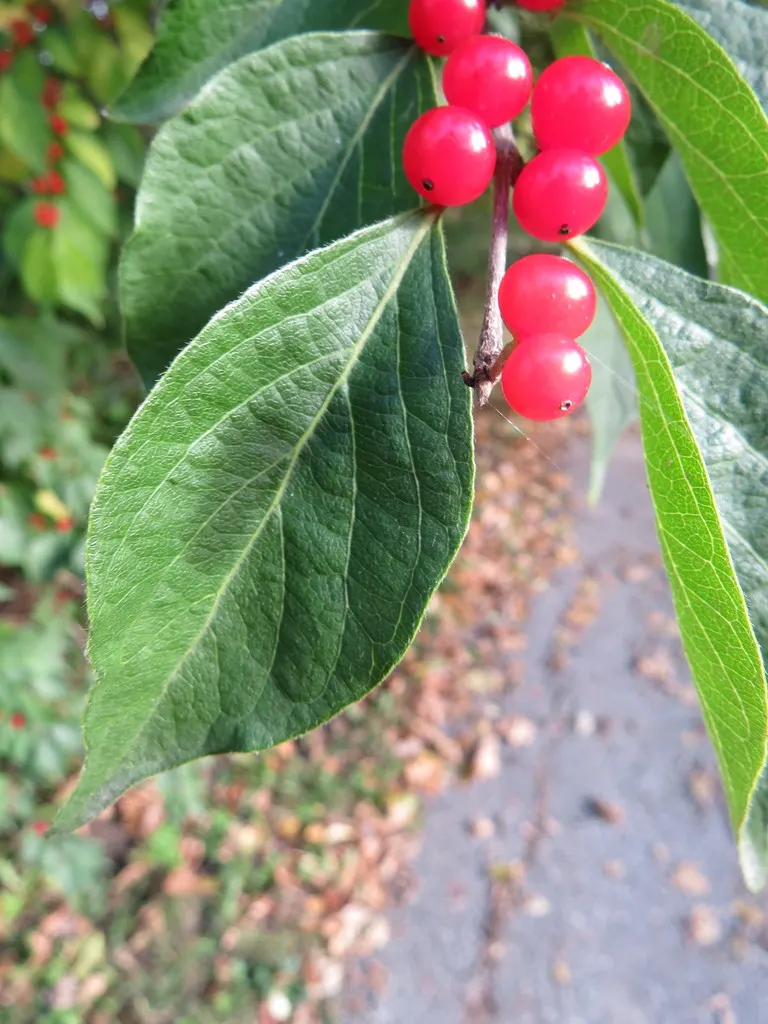
Leaves grow in pairs across from each other, 1 to 3½ inches long, with smooth (untoothed) edges. Amur honeysuckle leaves end in a long, sharp point.
Photo: Howard Williams / iNaturalist (CC BY-SA)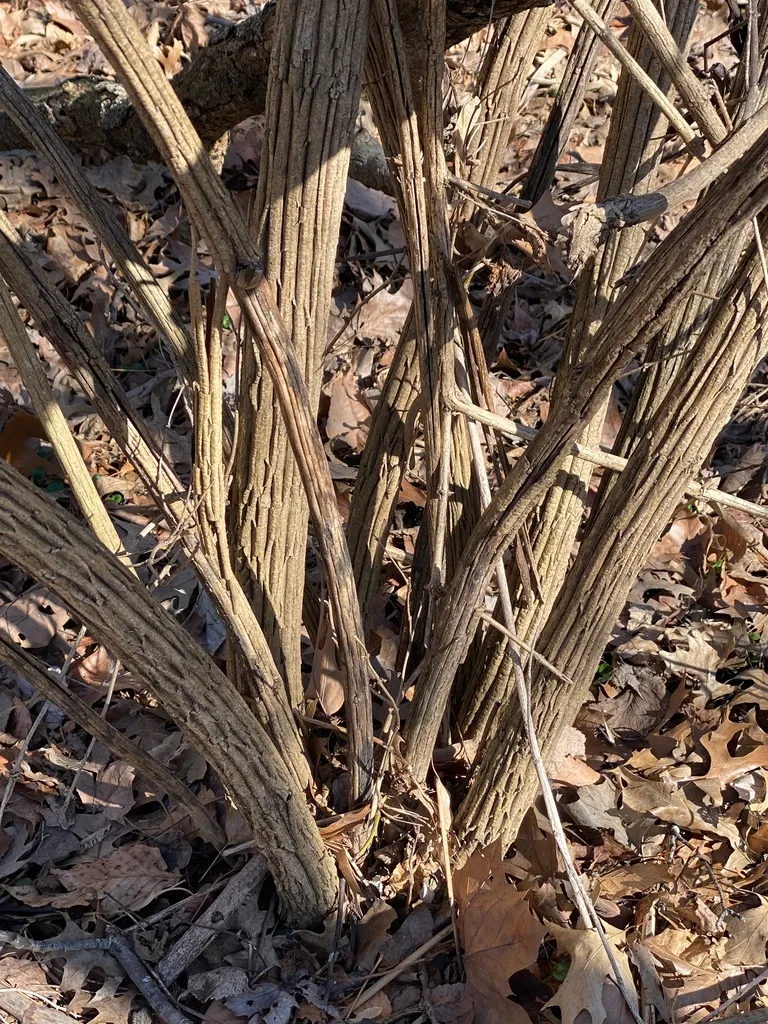
Older stems are grayish-brown with long ridges and grooves that look striped or shredded. Plants grow as clumps of many stems.
Photo: Sandy Wolkenberg / iNaturalist (CC BY)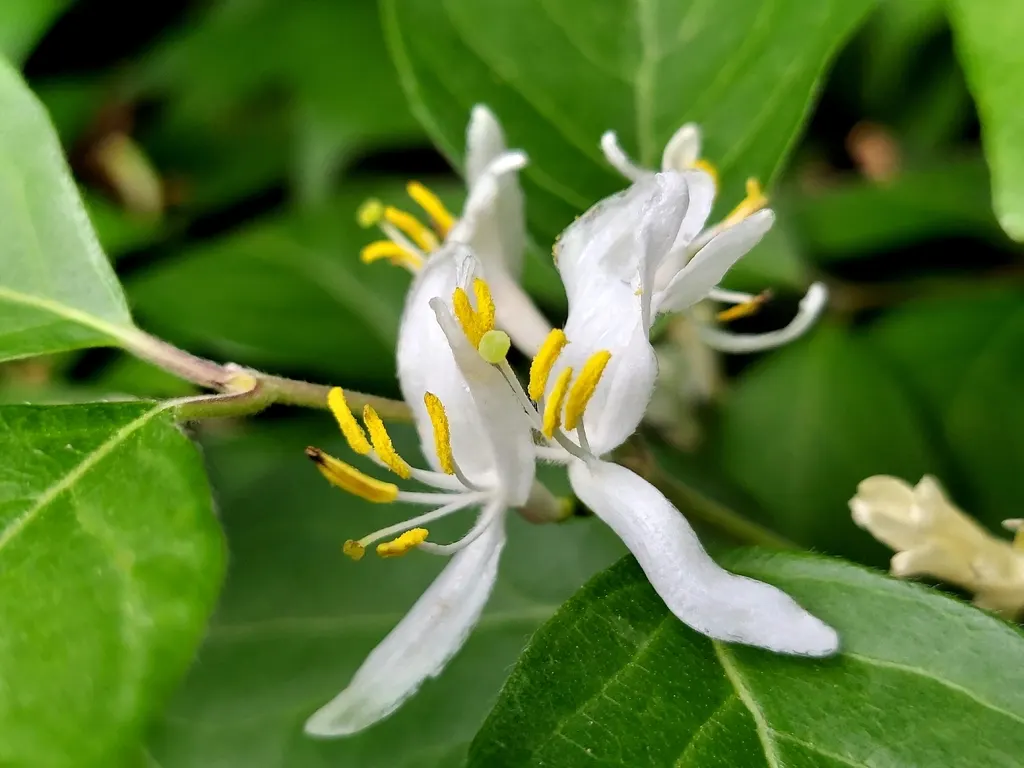
In spring it blooms with small fragrant flowers in pairs along the stem. Amur and Morrow’s open white and turn yellow. Tatarian is pink to red.
Photo: florawhite / iNaturalist (CC BY)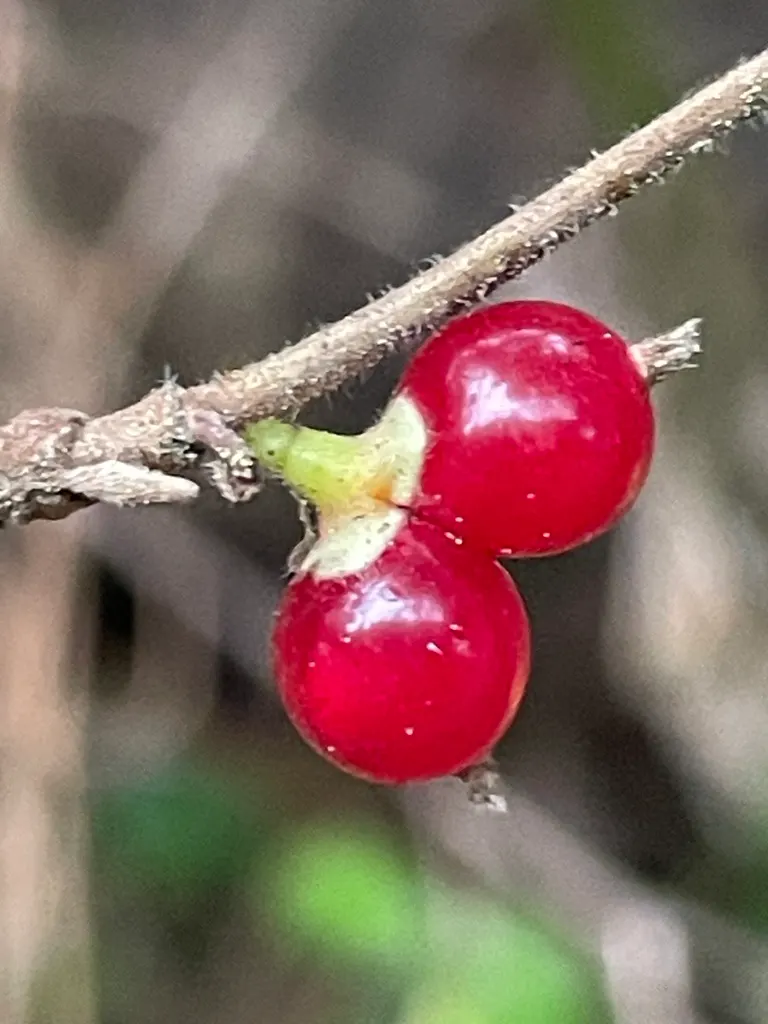
Small round berries about ¼ inch across, usually red, sometimes orange. They show up mid-summer and often hang on into winter.
Photo: Tom Erler / iNaturalist (CC0)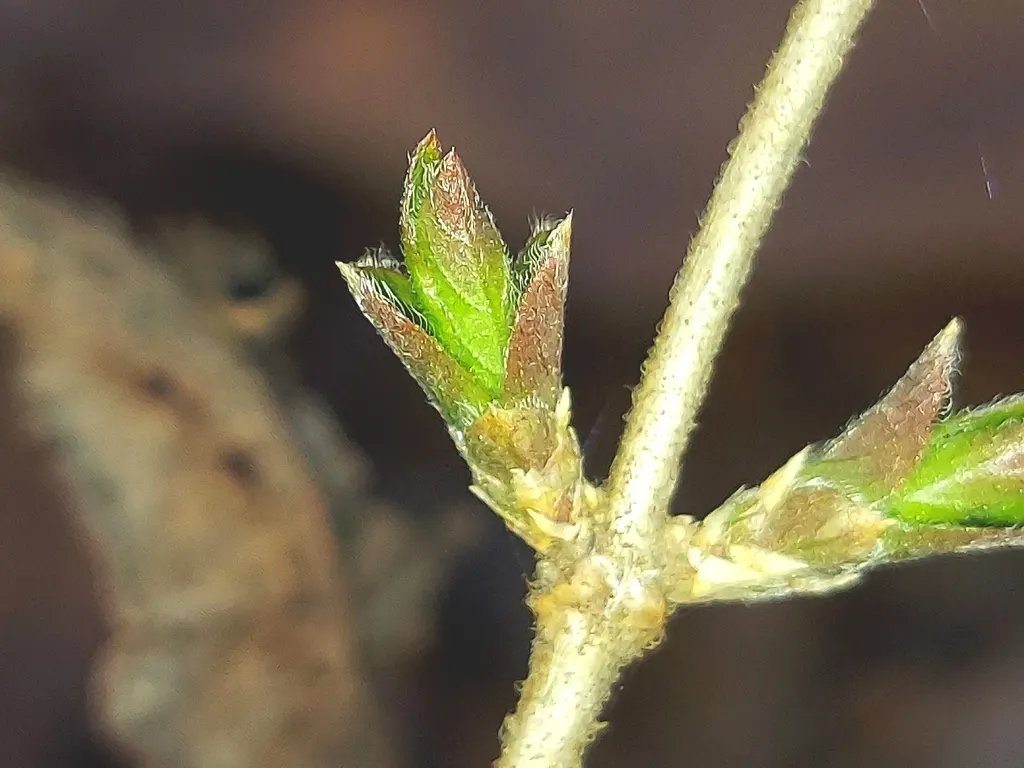
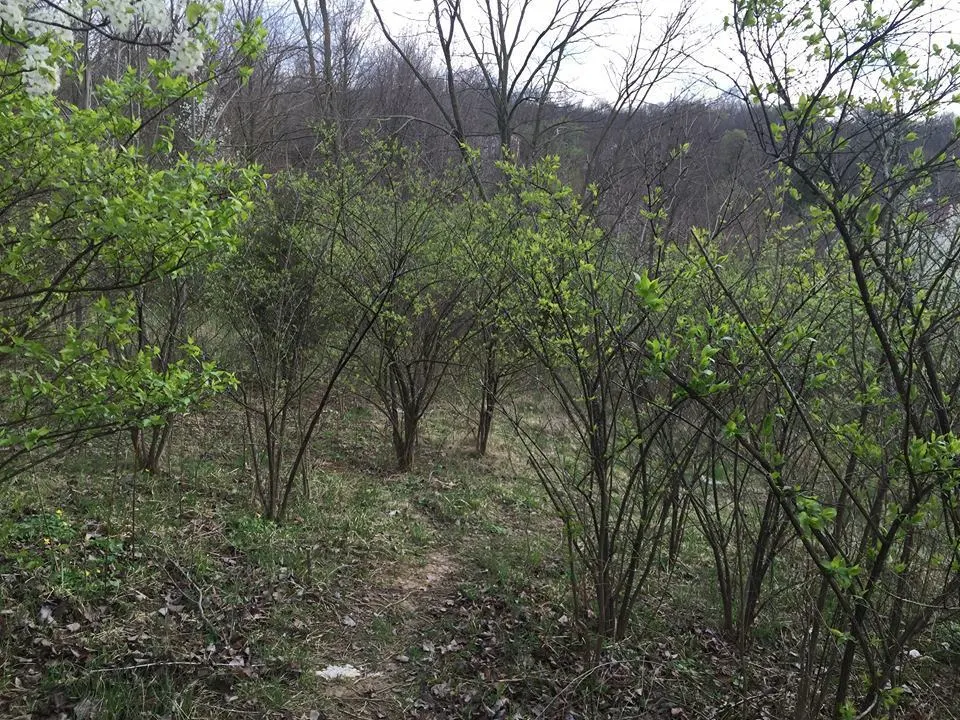
It is one of the first shrubs to leaf out in spring and one of the last to drop its leaves in fall. When the woods are bare and one shrub is green, look closer.
Photo: florawhite / iNaturalist (CC BY)When to look
Most of the year honeysuckle blends into the green. Two windows give it away.
It leafs out weeks before most native trees and shrubs. A green layer under bare trees is usually honeysuckle.
Photo: florawhite / iNaturalist (CC BY)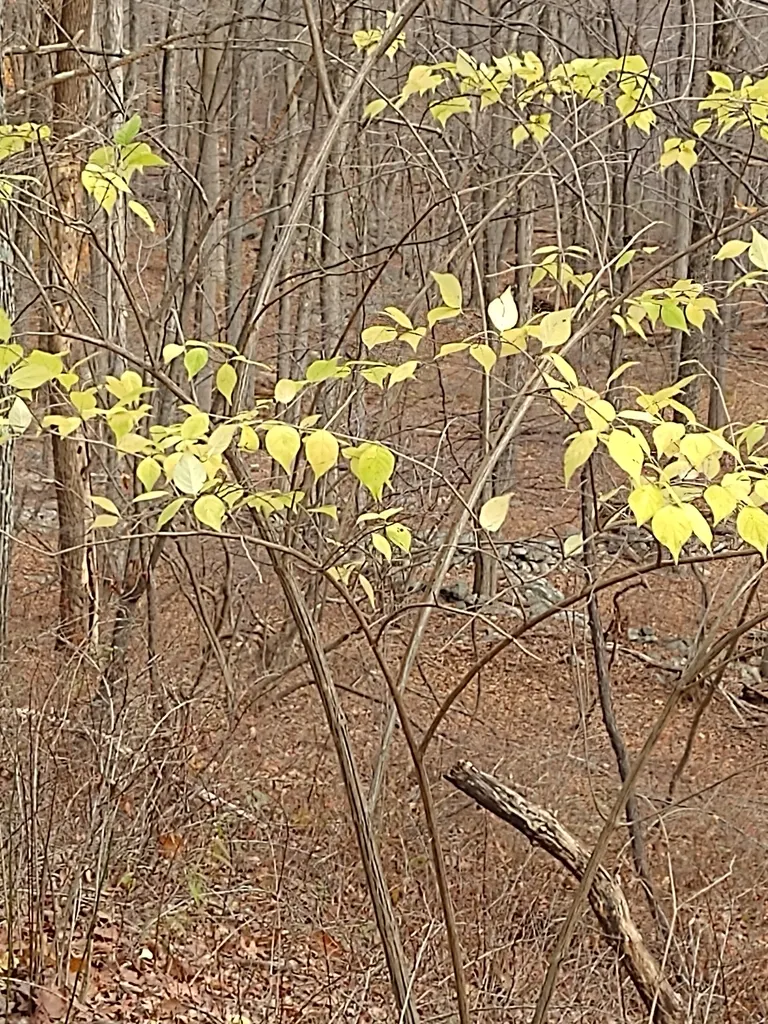
It holds green or yellow leaves well after most natives have dropped theirs. Mid-October through November is a great time to walk your property and flag it.
Photo: peakaytea / iNaturalist (CC0)Do not confuse it with
A few plants get mistaken for bush honeysuckle. The stem test sorts out most of them.
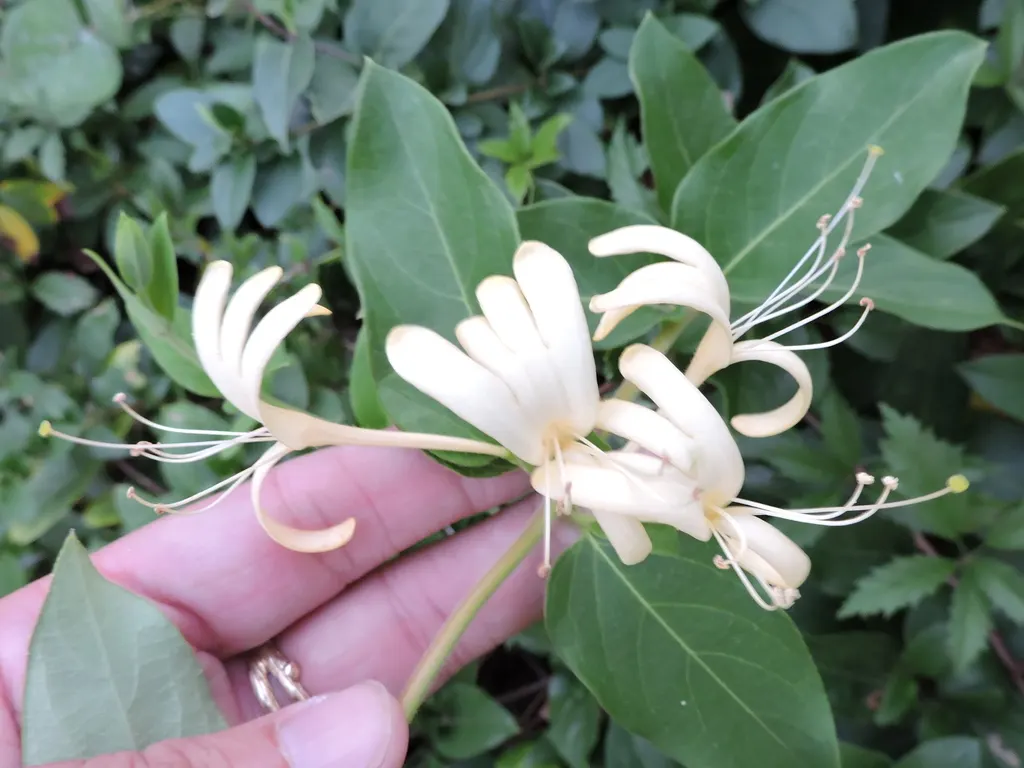
Also invasive, but it is a twining vine that climbs fences and trees, not a shrub. Fragrant white-to-yellow flowers. Different plant, different control.
A low native shrub with toothed leaf edges and a solid stem. Invasive honeysuckle has smooth edges and a hollow stem.
A native shrub with a solid stem. Keep it.
Hollow stem like honeysuckle, but small pink bell-shaped flowers and white berries.
Opposite leaves like honeysuckle, but the leaves look different and the stems are solid.
Not sure? Send us a photo of a snapped stem and a leaf. We are happy to take a look. Text 513-790-4150
How to get rid of it
There is no one-and-done fix. The plant has to be knocked out above ground and the roots have to be dealt with, or it comes back.
Any time, best after rain
Seedlings and small shrubs can be pulled or dug when the ground is soft. Get every bit of root or it sprouts back.
Year-round; winter is great
For thickets, forestry mulching grinds it all down in place, usually in a day, with no burn piles or hauling. Frozen or dry ground means less disturbance. The roots are still alive, so plan the follow-up.
Honeysuckle removalLate summer through winter
For bad spots, cut the stem close to the ground and paint Tordon RTU or a glyphosate product on the fresh cut right away. It soaks down and kills the root. Avoid spring, when sap is running.
Careful: Keep Tordon away from the roots of trees and shrubs you want to keep, and read the whole label first.
Once leaves are out; mid to late October is ideal
Spray needs leaves to land on. Since honeysuckle stays green after natives go dormant, a mid to late October spray hits it with less risk to everything else.
Next growing season
Watch treated areas for at least a year and hit anything that sprouts back. Or let our TruGreen program handle it.
Post-clearing treatmentAlways read and follow the product label, and keep spray off plants you want to keep. Mix rates and timing come from the label, not from us.
Season by season
Save it, print it, or grab the PDF.
FAQ
Have a question that isn't here? Call 513-790-4150.
Sources
Photo credits
Reference photos are research-grade observations from iNaturalist, used under their Creative Commons licenses and resized or cropped for this page. Each photo links to its source.
The roots will try to resprout and seeds in the ground will sprout with the new sunlight. Mowing, follow-up treatment or our TruGreen program keeps it from taking over again.
Cutting alone usually makes medium and large shrubs sprout back thicker. Pair cutting with a cut-stump treatment, or follow up on the regrowth.
Clearing works year-round, and winter is great because the ground is often frozen or dry. Cut-stump treatments work best late summer through winter. Spraying works best mid to late October.
It removes everything above ground in one pass, but the roots stay alive. Plan on follow-up mowing or treatment the next growing season.
No. That is usually Japanese honeysuckle, a twining vine. It is also invasive, but it is a different plant from the bush honeysuckle that forms thickets.
Birds eat the berries, which is how it spreads, but the berries are low in the fat migrating birds need. Native shrubs it crowds out are better food.
We clear honeysuckle thickets, hillsides and fence rows across Greater Cincinnati, then help you keep it from coming back.
Get a free quote Honeysuckle removal Call (513) 790-4150
We give you your land back.
Based in Loveland, Ohio. Forestry mulching, land clearing and property care within a 50-mile radius across Greater Cincinnati and surrounding parts of Ohio, Kentucky and Indiana.
513-790-4150team@brushworksco.com