
Before you start
- Get the site plan and clearing limits agreed.
- Protect soil-testing and reserve areas.
- Schedule clearing around the next trade's requirements.
Why Pre-Construction Clearing Matters
Land clearing isn't just about removing trees—it's about creating the canvas for your entire building project. The decisions you make during this phase affect everything that follows:
Stumps and root systems under or near your foundation cause settling, cracking, and water intrusion. Clearing removes these hazards before they become expensive problems.
How water flows across your property changes dramatically once trees are removed. Proper clearing includes understanding drainage patterns to prevent basement flooding and erosion.
Planning Your Building Site Clearing
Before any equipment touches your property, you need a clear plan. Here's how to develop one:
Every Ohio municipality has setback requirements—minimum distances your home must sit from property lines, roads, and easements. Common setbacks in Ohio:
Action item: Contact your county or township building department for exact setback requirements before planning your clearing area.
Walk your property with your house plans in hand. Mark these areas:
Ohio Permits and Regulations for Building Site Clearing
The good news: Ohio is relatively permissive about land clearing on private property. The nuances matter, though:
Some departments want to review site plans before any work begins
Zoning verification may be required to confirm residential use is permitted
Some Ohio communities (particularly suburbs of Columbus, Cleveland, and Cincinnati) have tree preservation requirements:
Clearing Methods for Building Sites: Comparing Your Options
You have several options for clearing your building site. Each has its place:
Heavy equipment pushes over trees and grubs out stumps, typically piling debris for burning or removal.
Arborists or tree services remove trees individually with chainsaws, typically followed by separate stump grinding.
Timeline: From Wooded Lot to Construction-Ready
Here's what a realistic timeline looks like for clearing a residential building site in Ohio:
If needed: additional stump grinding, rough grading, driveway base installation, utility marking.
Site is prepared for foundation work, well drilling, septic installation, or whatever comes next in your build sequence.
Working with Your Builder: Coordination Tips
Clearing before you have a builder selected? Or coordinating with one already under contract? Here's how to make it work:
Get preliminary house plans first: Even rough sketches help determine clearing boundaries. Square footage, garage orientation, and foundation type all affect how much to clear.
Don't grade: Let the builder handle final grading once the foundation is designed and staked.
Document everything: Photos of the property before, during, and after clearing help future planning.
Common Mistakes to Avoid
The septic field needs to be in an area that percolates well, isn't too close to wells or property lines, and often needs its own clearing. Plan for this upfront.
Starting a big clearing project in April on wet clay soil. Equipment ruts up the property, work stops for rain, and the site becomes a mud pit. Winter/early spring on frozen or dry ground is usually better.
Agree on the handoff
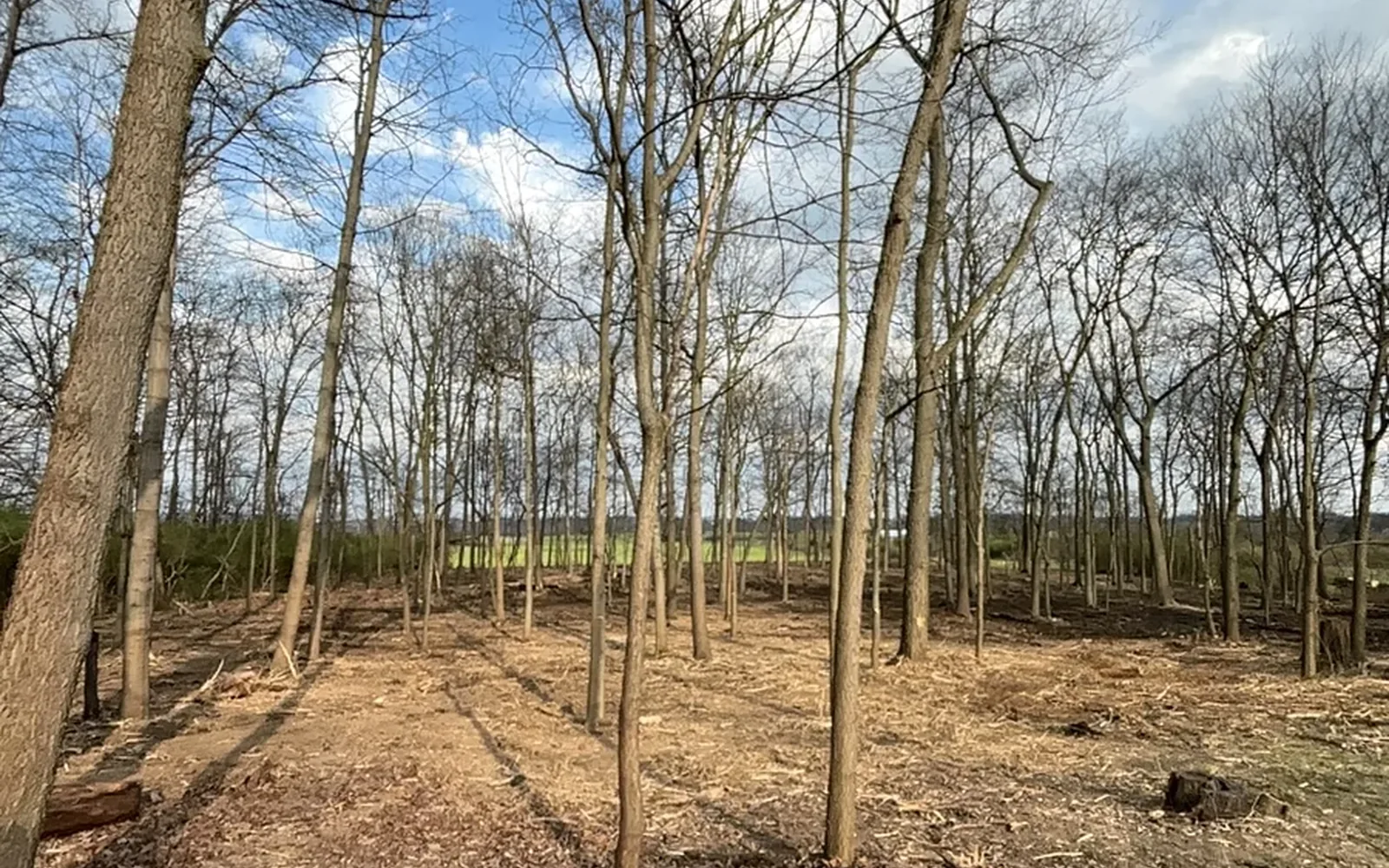
Before work begins, define what the next person needs to find on site. A rough mulched opening may still contain roots, stump remnants, and uneven ground. Grading, structural preparation, planting, surfacing, and specialist tree work are separate unless explicitly included.
Keep the marked work map with the quote. At completion, compare the limits and finish, document any follow-up, and decide who will maintain the area. Photos help record the result, but they do not replace checking the ground and access.
Plan the work for your property
Send the site address, recent photos, a marked clearing area, and the finish you want. We can discuss where clearing fits and what needs a different trade.
Discuss your project → Explore pricing