
Before you start
- Keep people and animals out of the patch.
- Photograph plants without handling them.
- Arrange qualified identification and a site-specific control plan.
Get a confident identification
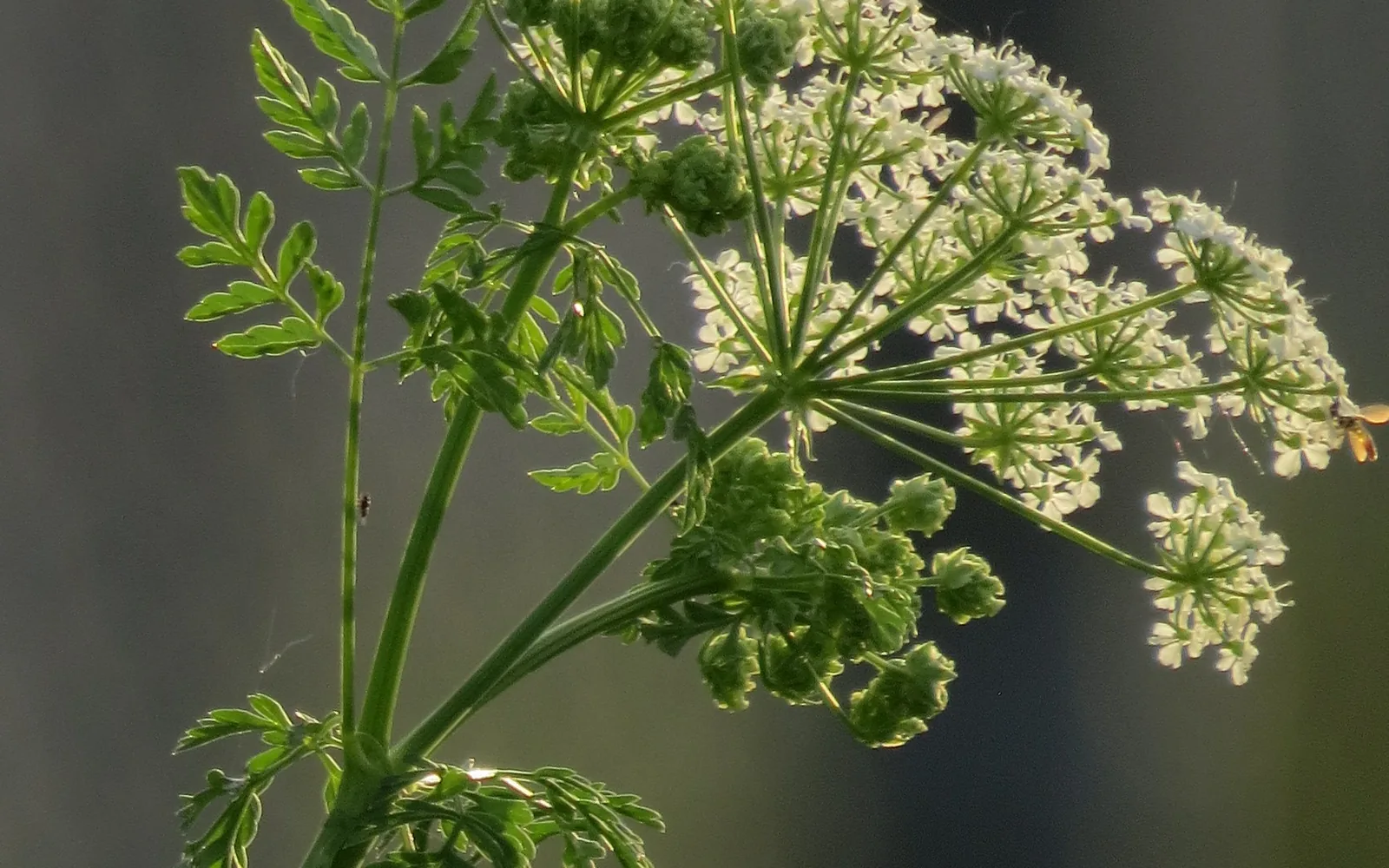
Poison hemlock can be confused with other plants in the carrot family. Use qualified identification rather than a photograph alone or an internet checklist. Photograph the plant from a safe position and do not taste or deliberately handle it.
Ohio State Extension identifies it as a toxic biennial. Growth stage affects management: a low first-year plant and a flowering stand are not the same cleanup task.
Keep people and livestock away
Do not mow, mulch, burn, or feed suspected plants to animals as a casual cleanup measure. Prevent access while the control and handling plan is established. Tell the contractor about nearby grazing areas, hay, play spaces, and public paths.
If someone may have ingested the plant or has symptoms after exposure, obtain urgent medical or poison-control advice. Do not delay that response while trying to finish identifying the plant.
Address the stand and future seedlings
Have a qualified professional choose the method for the plant’s growth stage and site. A plan should cover exposure prevention, seeds, material handling, and later inspection—not just reducing the height of the stand.
Take dated location photos before and after the work. Keep the area accessible so new plants can be identified early, and arrange a follow-up rather than assuming a single visit ends the problem.
Prepare information without entering the patch
From a safe position, record the location, approximate extent, whether the plants are flowering or carrying seed, and what is nearby. Tell the professional if the stand borders a pasture, hay area, public path, or water feature. That context is as important as a close-up photograph.
Ask for a plan covering the initial work, the handling of material, and inspection of later growth. Identify who will keep people and animals out during the work. If multiple contractors use the property, share the marked area so one does not mow or move material before the specialist visit. Do not turn an identification request into an accidental exposure.
Further reading
Plan the work for your property
Send the site address, recent photos, a marked clearing area, and the finish you want. We can discuss where clearing fits and what needs a different trade.
Discuss your project → Explore pricing