
Before you start
- Keep frequently used paths and lawn edges maintained.
- Separate play areas from dense edges where practical.
- Continue tick checks and recommended personal protection.
Focus on the places people use
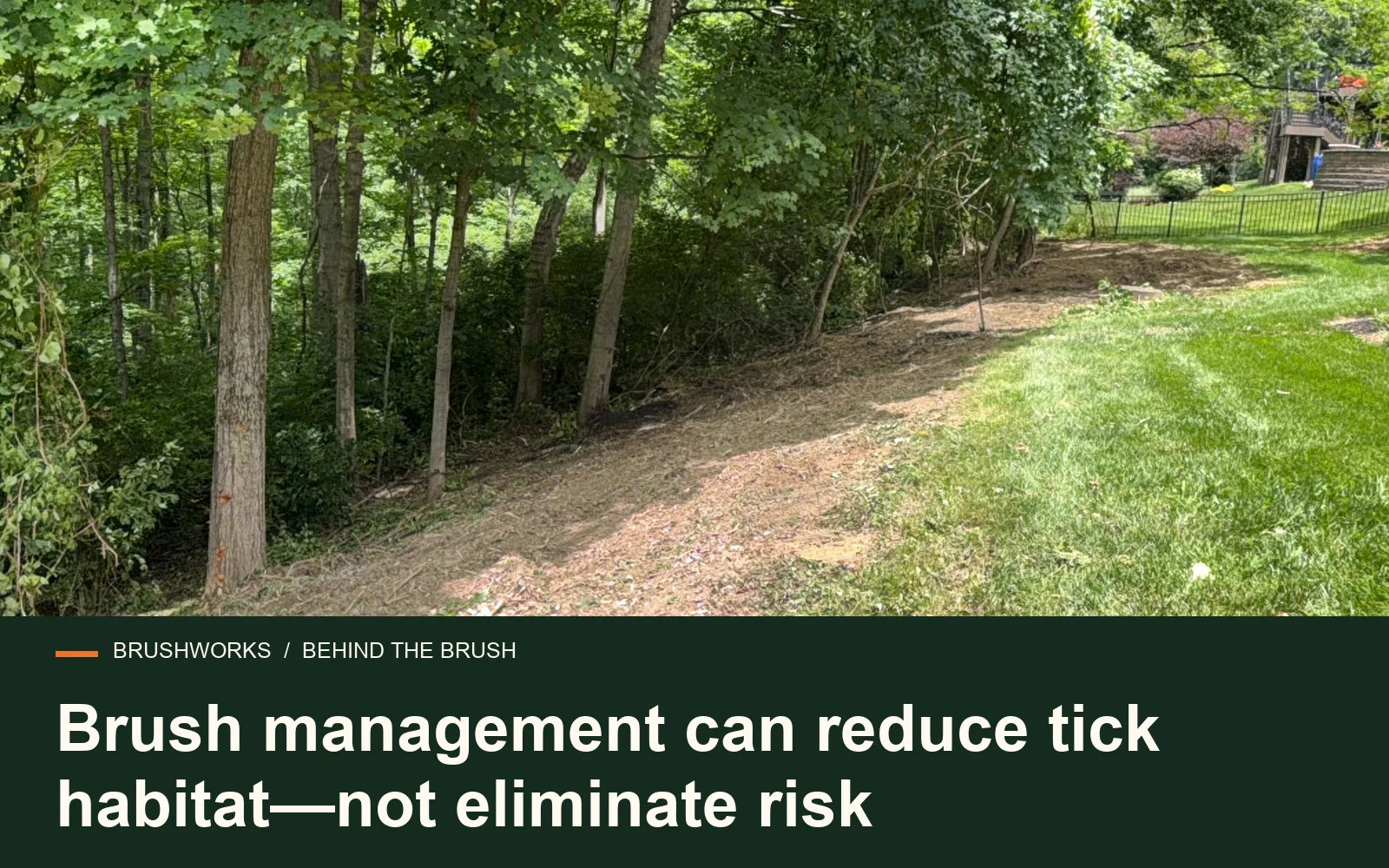
Prioritize frequently used paths, play areas, and the transition between lawn and dense growth. The aim is maintainable space, not removing every tree on the property. Walk those routes and identify where vegetation brushes against people or limits routine maintenance.
Combine maintenance with personal prevention
CDC recommends measures such as managing leaf litter, tall grass, and brush and keeping play areas away from wooded edges. These are risk-reduction measures, not a promise that ticks will be absent.
Continue recommended personal bite prevention and tick checks after outdoor activity. A freshly cleared property does not replace those habits, and clearing should not be sold as preventing tick-borne disease.
Choose a finish you can maintain
Specify which edges and paths should stay open, how the ground will be maintained, and who is responsible for returning growth. A large opening that becomes inaccessible to the mower does not serve the goal well.
Review the area periodically during the growing season. Keep the scope focused on usable space and habitat management rather than unsupported percentages of tick elimination.
Plan a yard-maintenance route
Walk the areas your household uses most: the route to the shed, the side of a play area, a dog-walking path, and the edge where mowing stops. Choose manageable maintenance boundaries instead of assuming a wide clear-cut is necessary. Retaining woodland and creating usable household space can be compatible goals.
After the work, check whether the mower can turn, gates remain usable, and brush can be inspected without pushing through it. Decide who handles leaf litter and returning vegetation. If you want advice about tick-control products or disease risk, ask the appropriate health or pest-management professional; a land-clearing estimate should not substitute for that advice.
Further reading
Plan the work for your property
Send the site address, recent photos, a marked clearing area, and the finish you want. We can discuss where clearing fits and what needs a different trade.
Discuss your project → Explore pricing