
The short version
- It breaks down over years, not weeks.
- Thin layers get covered up first. Thick spots, where the brush was heaviest, last longest.
- Where grass or regrowth comes up through it, you stop seeing it well before it's gone.
- Soil contact, moisture and nitrogen speed it up.
- Chips left on top tie up less nitrogen than chips mixed into the soil.
What's on the ground when we finish
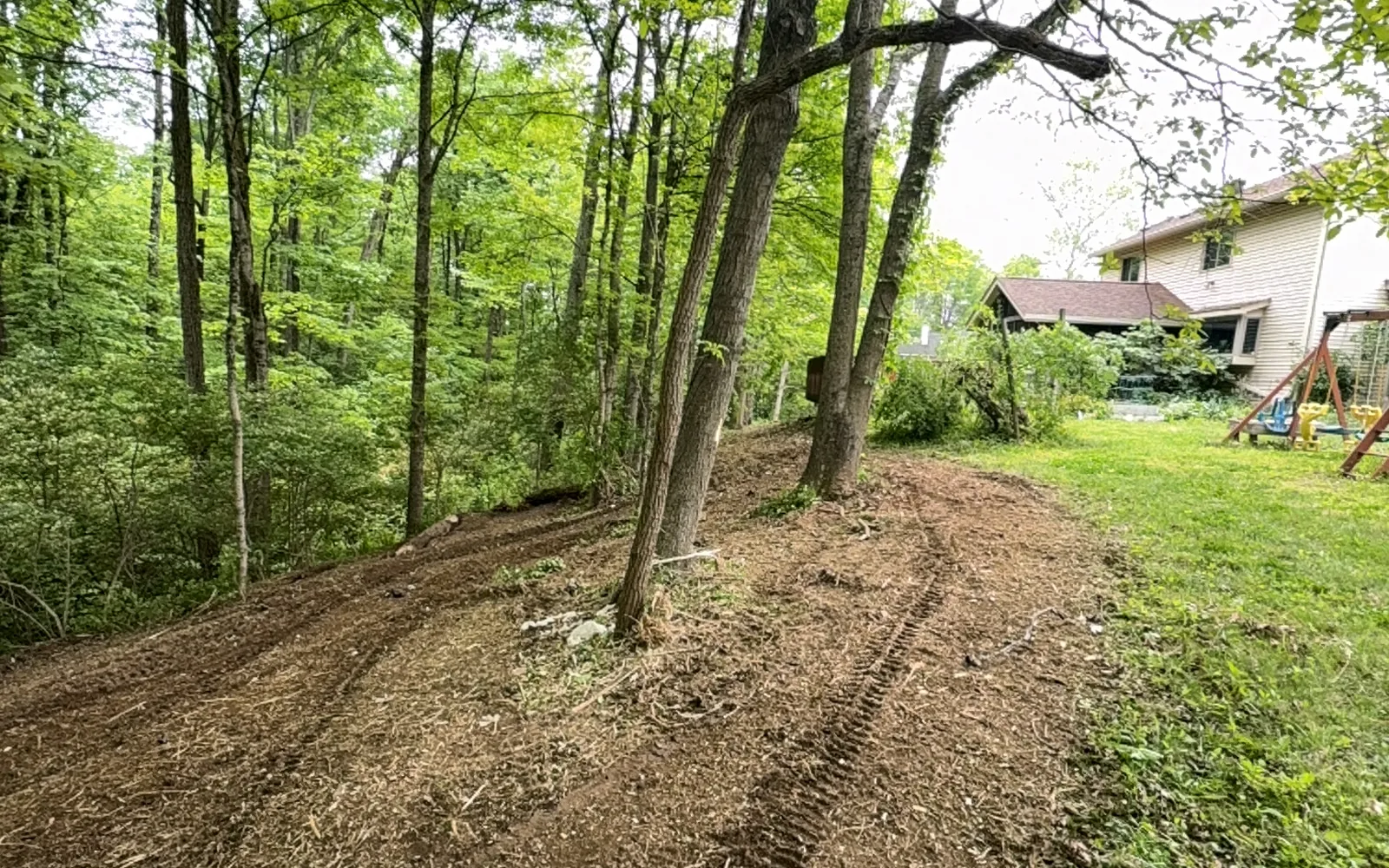
Forestry mulching grinds brush and small trees where they stand. What's left is a layer of shredded wood, bark and leaves lying on the ground. It isn't even. Where the brush was light, it's a thin scatter you can see dirt through. Where the brush was thickest, it can be a few inches deep and fluffy.
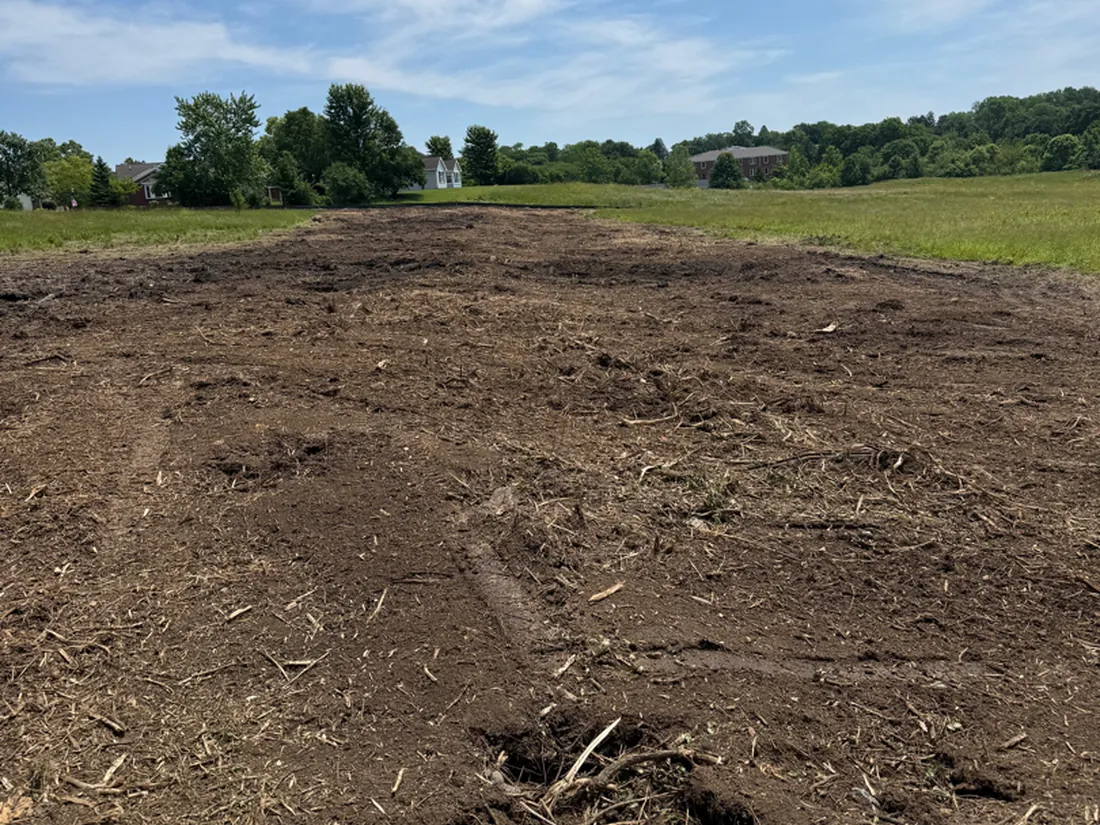
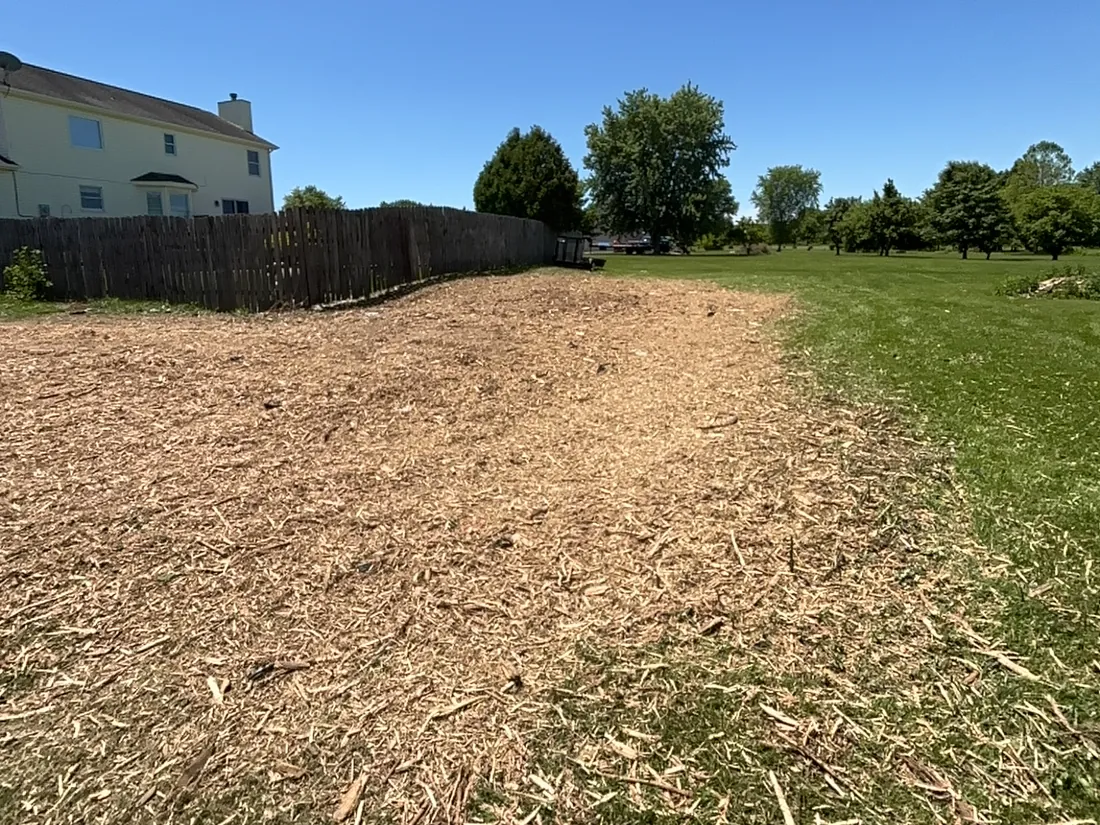
How thick the layer is makes a big difference. The thin areas get covered up fast. The thick spots hang around.
What to expect over time
| When | What you'll see | What to do |
|---|---|---|
| Day one | Loose, fluffy mulch. Thin and patchy where the brush was light, a few inches deep where it was thickest. | Walk it and flag stubs, rocks and old wire. |
| First few weeks | Rain and foot traffic start to settle it. | If you want grass, rake the heavy spots thin, then seed in the right window. Our grass guide has the timing. |
| First growing season | Grass, weeds and brush sprouts come up through the thin spots. As they grow, they wrap around the mulch and pull it down to the soil. | Let regrowth reach 5 to 6 inches, then mow with the deck on its highest setting. Spray woody regrowth once it leafs out. |
| After that | Where something is growing, the mulch keeps getting pulled down and covered. Thick spots still show chips, but they keep shrinking. | Keep mowing. Rake out or power rake any spot that won't grow in. |
That last row is the one people ask about. The mulch is still there in year two. You just see less of it, because it's down in the grass instead of sitting on top.
What the research shows
Researchers have tracked mulched forest ground for years, mostly to study wildfire fuel. None of the studies we found were in Ohio, but they give a rough picture of the pace.
| Where | What they measured | What they found |
|---|---|---|
| Pine flatwoods in north Florida (warm and wet) | Mulched leaves and small twigs left out in mesh bags | After a year, about 74% of the leaves and 82% of the small twigs were still there. |
| Colorado juniper stands (dry) | How deep the mulch was | Up to about 3½ inches right after mulching. Under an inch six to nine years later, mostly because it packed down. |
| Colorado mulched forest stands (dry) | How much the mulch weighed | It had lost 50% to 80% of its weight six to nine years after mulching. |
| A power line corridor in northwest British Columbia | Chip depth and regrowth | Native plants came back where the chips were under about 3 inches deep. |
Two things stand out. First, it's slow everywhere: even in warm, wet Florida, most of the material was still there after a year. Second, moisture matters. The BC review notes decomposition was minimal in dry areas and faster in low, damp spots. Ohio is a lot wetter than those Colorado sites, so we'd expect mulch here to break down faster than it did there. That's our read, not something these studies measured. It's still a matter of years.
What makes it break down faster
- Thin it out. Thin layers break down and grow in faster than thick ones. Rake the heavy spots out flatter. Spread it, don't haul it off.
- Get it touching soil. In the BC corridor study, mixing soil in with the chips sped up decomposition. That's what our power raking does: it works the mulch into the soil and leaves a soft seedbed. It needs a healthy amount of topsoil to work, so ask us whether your ground is a fit.
- Keep something growing in it. Grass and regrowth wrap around the mulch and pull it down to the soil, where it breaks down faster than chips sitting on top.
- Moisture. Low, damp spots break down faster than dry ones. You can't change the weather, but don't be surprised when the low spots go first.
- Nitrogen. Wood needs nitrogen to break down. Purdue's forestry extension says adding nitrogen fertilizer to a soil and chip mix can speed up the process. Follow the product label for how much.
Will it rob nitrogen from your soil?
Some, depending on where the chips are. The microbes breaking down wood use nitrogen while they work. Oregon State Extension notes that chips mixed into soil have a greater tendency to tie up nitrogen than chips left on the surface. Fine material like sawdust ties up more than large chips.
Purdue puts it plainly: mixing fresh chips into soil can reduce fertility for a while.
- Mulch left on top, nothing planted: nothing you need to do.
- Mulch worked into the soil and seeded: feed the new grass. TruGreen offers a seed and fertilize service, and we can help set it up.
- Garden beds: keep fresh chips on top as mulch rather than digging them in.
What about the stumps and roots?
Forestry mulching grinds brush and small trees down at or near the surface. It doesn't dig them out, and stump grinding and root removal are separate work outside what we do. So for a while you may see short stubs and roots poking up through the mulch.
Once those plants die off, the stubs and roots shrink down into the soil and break down like everything else. Over time you stop seeing them. The exception is anything still alive. Bush honeysuckle and other woody brush will resprout from live roots. Our honeysuckle guide covers how to finish it off.
Before you mow
Walk the area and flag stubs, rocks and old wire before you put a mower deck over it. Fresh mulch also catches in blades, so wait until regrowth is 5 to 6 inches tall and mow high. More in our aftercare guide.
Should you rake it up or haul it off?
Usually not. While it breaks down, the mulch covers bare soil and slows regrowth. Hauling it off is a lot of work, and it takes that cover away.
- Want a lawn soon? Rake the thick spots thin so seed can reach soil, or have us power rake it. Our grass guide has the timing.
- Near the house? Iowa State Extension says to keep mulch several inches away from the foundation and never let it touch siding or windowsills.
- On a slope? Leave it on top. It helps cover the soil, but it isn't an erosion-control system. Check slopes after the first few hard rains and seed or straw any bare spots.
Our 18-month mulch experiment
We set up three areas and checked back 18 months later: mulch left in place with grass seed, mulch removed with grass seed, and one left alone with no seed.
Common questions
How long does forestry mulch take to break down?
Years, not weeks. How many depends mostly on how thick it is and how wet the spot stays. Thin layers get pulled down and covered once grass or regrowth comes up through them. Thick spots last longest. Research on mulched forest ground found most of the material still there after a year, even in a warm, wet climate.
Does forestry mulch attract termites?
Iowa State Extension says no: mulch does not attract termites to a house or cause them. Wood mulch can improve conditions for termites already in the soil, so keep it several inches away from the foundation and never against siding or windowsills.
What are the mushrooms growing in the mulch?
Part of the breakdown. Penn State Extension says the fungi in wood mulch are a natural part of decomposition and don't harm landscape plants. They show up from about April through October, usually after rain. Some mushrooms may be poisonous if eaten, so keep kids and pets from eating them.
Can I till the mulch in to speed it up?
Mixing it into soil does speed it up, but it also ties up more nitrogen, so plan to fertilize anything you plant. Our power raking service works the mulch into the soil and leaves a seedbed, but it needs a healthy amount of topsoil to work. On slopes, leave the mulch on top.
Will grass grow through forestry mulch?
Yes, where it's thin and the seed can reach soil. Rake the thick spots thin before you seed. Our grass guide covers timing and seed.
Sources
- Shifting Mosaics Corporation for BC Wildfire Service and FPInnovations (2024): Chipping, Mastication, and Mulching as Fuel Management Methods in British Columbia, a literature review
- Kobziar et al., University of Florida, Joint Fire Science Program final report (2013): Characterization of Masticated Fuelbeds and Fuel Treatment Effectiveness in Southeastern US Pine Ecosystems
- Oregon State University Extension: Wood chips for mulch?
- Purdue Forestry and Natural Resources: Can the mulch made by tree stumps be mixed into the surrounding soil for new plants?
- Iowa State University Extension: Does landscape mulch lead to termites in your home?
- Penn State Extension: What is growing in my landscape mulch? Mushrooms, slime molds, and fungus
Want the mulch worked in?
If you'd rather not wait it out, ask us about power raking. We'll tell you whether your ground has the topsoil for it.
Get a free quote → Read the aftercare guide